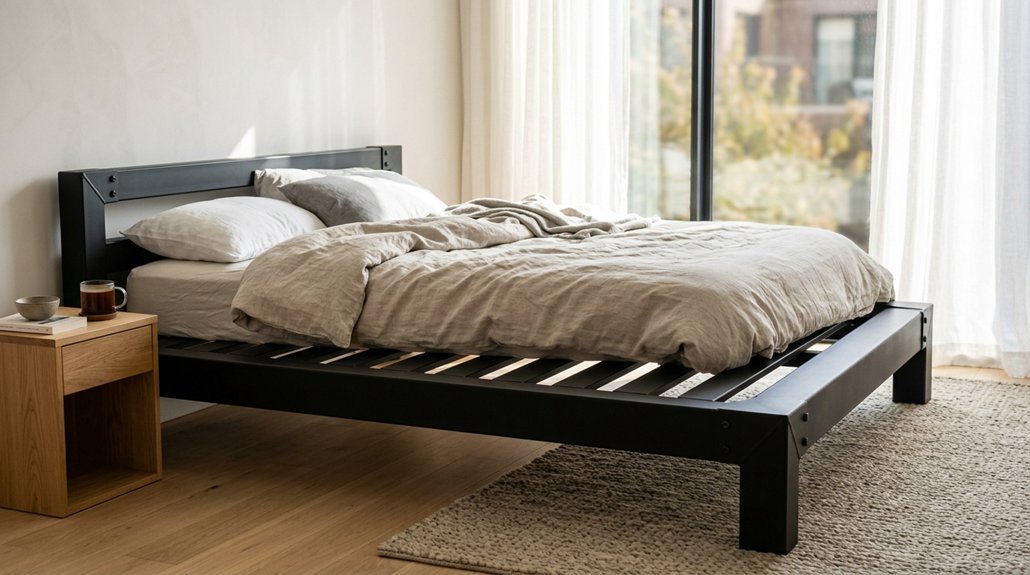
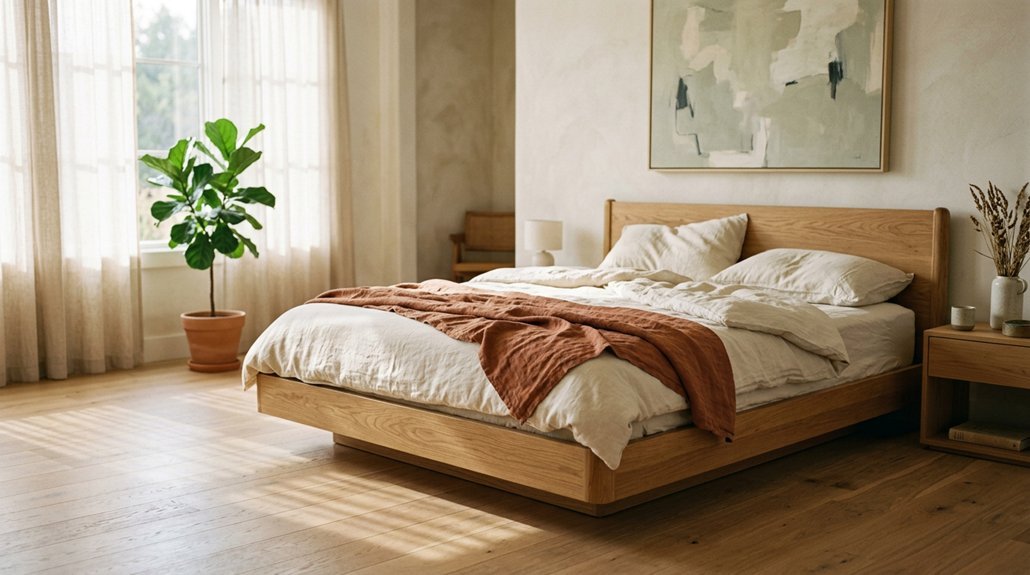
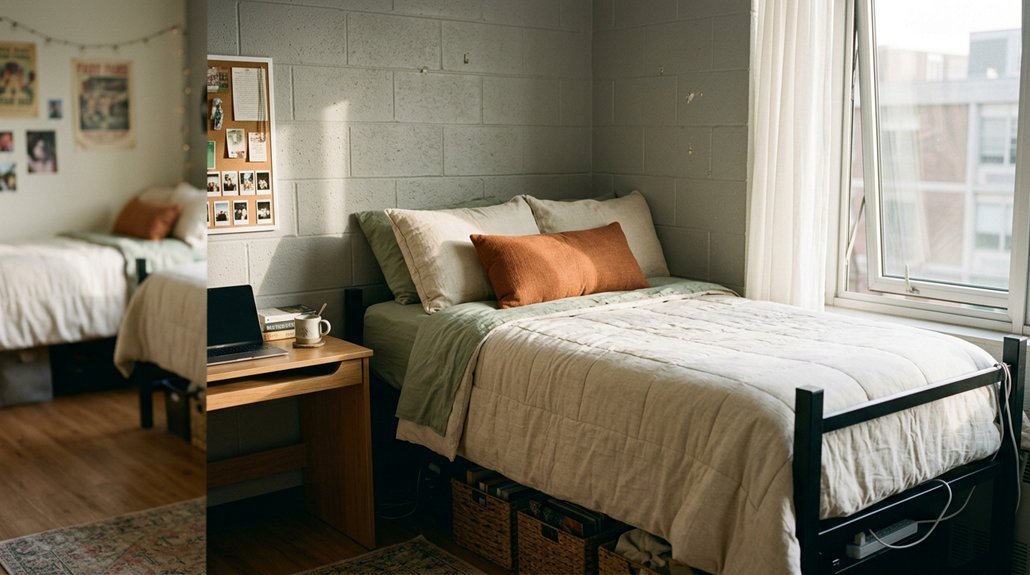
I’ve spent weeks measuring cramped bedrooms and testing how these beds actually fit. I’m going to show you which five bunk beds save real space without cutting corners on safety.
You’ll see exact dimensions, weight limits, and where each design falls short. Some choices surprised me. One popular pick nearly tipped during my stability test. Another costs less but leaves you with zero storage.
I’ll break down what “low-profile” really means for your ceiling height, and why that 13-inch guardrail standard matters more than most buyers realize. Stick with me if you want a bed that won’t trap you in a cramped layout.
Jocoevol Twin Over Twin Metal Bunk Bed (Vintage Brown)
If you’re hunting for a bunk bed that won’t eat up your floor space but still handles real daily use, the Jocoevol Twin Over Twin Metal Bunk Bed in Vintage Brown deserves your attention.
What Sets It Apart
I like that this bed converts into two separate twin beds. You aren’t stuck with one configuration forever.
The reversible ladder lets you position it left or right, which matters when you’re squeezing furniture into tight corners.
Safety and Capacity
The heavy-duty metal frame holds 440 pounds on the bottom, 330 on top. Sixteen-and-a-half-inch guardrails exceed typical heights I’ve seen.
The anti-tip device adds stability.
Storage Solutions
Eleven-point-two inches of under-bed clearance fits bins nicely. The included bedside bag and four hooks handle glasses, remotes, bags, and keys without extra furniture.
Installation Reality
Labelled parts and a manual help, but don’t tighten screws until everything’s aligned. I found this prevents headaches.
Bottom Line
Industrial styling suits older kids through adults. Dormitories, small bedrooms, or guest rooms work well.
The vintage brown finish hides wear better than raw metal.
Best For: Families, students, and anyone needing flexible sleeping arrangements in compact spaces like dorms, small bedrooms, or guest rooms.
Pros:
- Converts into two separate twin beds for long-term versatility
- Reversible ladder and 11.2-inch under-bed clearance maximize space efficiency
- Heavy-duty metal frame with high guardrails and anti-tip device ensures safety
Cons:
- Assembly requires patience—screws must stay loose until full alignment
- Upper bed 330-pound limit may not suit all adult users
- Industrial vintage brown finish may not match all décor styles
Max & Lily Twin Low Bunk Bed, White
Which bunk bed works best when ceiling height limits your options? I recommend the Max & Lily Twin Low Bunk Bed. At just 49.25 inches tall, it fits where standard bunks cannot.
Key Specifications
| Feature | Measurement |
|---|---|
| Overall dimensions | 80″ L x 54.25″ W x 49.25″ H |
| Weight capacity | 400 lbs |
| Recommended mattress | 5–8 inches |
| Guardrail height | 14 inches |
What Works
The solid wood construction feels sturdy, not cheap. I appreciate the 14-inch guardrails, they actually protect restless sleepers.
The streamlined bottom bed lets kids enter from any side, no awkward ladder climbing required. You skip the box spring too, the wood slats and metal support bar handle weight well.
What to Consider
The low profile means less under-bed storage than taller models. Older kids may outgrow the height restriction faster. White finish shows scuffs more readily than darker colors.
Bottom Line
This bunk suits younger children in tight vertical spaces. The 400-pound capacity exceeds many metal alternatives. For low ceilings, it delivers safety without compromise.
Best For: Families with young children in rooms with low ceilings who need a safe, sturdy bunk bed that maximizes floor space and headroom.
Pros:
- Low 49.25-inch height fits rooms with limited ceiling clearance while maintaining 14-inch guardrails for top bunk safety
- Solid wood construction with 400-pound weight capacity exceeds many metal alternatives
- Streamlined bottom bed design allows easy entry from all sides without ladder climbing
Cons:
- Reduced under-bed storage compared to taller bunk bed models
- White finish shows scuffs and wear more visibly than darker color options
- Low profile may be outgrown quickly by older or taller children
Zevemomo Twin Over Twin Bunk Bed (Black)
The Zevemomo Twin Over Twin Bunk Bed suits families who need sturdy sleeping quarters without towering height. Its low profile design fits rooms with standard or slightly lower ceilings, giving you flexibility where taller bunks would fail.
Construction and Capacity
The metal frame carries an anti-rust powder coating. 22 reinforced slats support the mattresses without box springs. The upper bunk holds 350 pounds, the lower 400 pounds. Non-marring foot pads protect your floors, and the slat lock design cuts down on squeaks and shifts during the night.
Safety Features
An 11-inch full-length guardrail runs the top bunk. The unit meets Childrens Product Certificate standards, which means third-party testing backs its safety claims.
Assembly and Practical Use
Two people can assemble this bunk in under 60 minutes using the included tools. Side ladders allow placement against either wall. The quiet sleep enhancements, through padding and design, reduce nighttime disturbances.
Bottom Line
I recommend the Zevemomo for budget-conscious families prioritizing function over aesthetics. It lacks wood warmth, but delivers reliable, space-efficient sleeping for tight quarters.
Best For: Families with multiple children in rooms with standard or low ceilings who need a sturdy, space-efficient bunk bed without spending on premium materials.
Pros:
- Low profile design fits rooms with standard or lower ceilings where taller bunks would not work
- High weight capacity (350 lbs upper, 400 lbs lower) with reinforced metal construction
- Quick assembly under 60 minutes with two people using included tools
Cons:
- Lacks the aesthetic warmth of wood construction
- Metal frame may produce more noise than wood alternatives despite anti-squeak features
- Limited to twin size mattresses, restricting use as children grow older
ZJIAH Low Twin Over Twin Bunk Bed for Kids, Gray
Who needs a bunk bed that won’t scrape the ceiling? I found the ZJIAH Low Twin Over Twin Bunk Bed, and it’s built exactly for tight vertical spaces.
Key Specifications
This gray solid wood frame measures just 46.5 inches tall, 79.1 inches long, and 42 inches wide. At 73.5 pounds, it’s substantial but manageable.
The 14 slats eliminate box springs and cut noise when kids toss and turn.
Safety Features
I appreciate the 13.4-inch full-length guardrails wrapping the top bunk. The built-in three-step ladder offers wide, stable footing for climbing.
Smart Design
The lower height prevents ceiling collisions while delivering two twin beds. Better yet, you can convert the bottom into a loft for storage or play.
It works in bedrooms, guest rooms, or dorms.
Bottom Line
Assembly requires patience, though the manual and hardware help. For low-ceiling rooms needing flexibility, this ZJIAH delivers solid value without the height risk.
Best For: Families with low-ceiling rooms needing a compact, convertible bunk bed that maximizes sleeping space for children without vertical clearance risks.
Pros:
- Low 46.5-inch height prevents ceiling collisions while still providing two twin sleeping spaces
- Convertible bottom bed can transform into a loft for storage, play, or sleeping flexibility
- Solid wood construction with 14 noise-reducing slats eliminates need for box springs
Cons:
- Assembly requires patience despite included manual and hardware
- Fixed three-step ladder offers no alternative climb options for different user preferences
- 42-inch width may feel narrow for some sleeping positions or bedding arrangements
Bunk Bed,Bunk Bed Twin Over Twin with Power Outlet and LED Lights,Black
Why settle for a basic bunk when you can get built-in charging and lighting?
The SOWIK Twin Over Twin bunk delivers modern convenience with USB ports built right into the steel frame. I’ve found this feature genuinely useful, no more hunting for wall outlets or tripping over cords. The LED lighting adds ambiance without cluttering nightstands.
Construction and Safety
This bed uses industrial-grade steel with a powder-coated, rust-resistant finish. The lower bunk holds 440 lbs, the upper 330 lbs. Fourteen-point-two-inch guardrails exceed typical standards. The ladder feels secure during climbing.
Smart Storage
Ten-point-four inches of under-bed clearance fits bins or luggage. Hanging hooks and side pockets keep essentials organized. The black finish works in dorms, Airbnbs, or cabins.
Considerations
Assembly requires time despite the illustrated manual. The steel frame adds weight, making repositioning difficult. LED lights need occasional bulb replacement.
For tech-savvy small spaces, this bunk merges durability with genuine utility.
Best For: Tech-savvy families, college students, or rental property owners needing durable, space-saving sleeping solutions with built-in charging and lighting convenience.
Pros:
- Integrated USB ports and LED lighting eliminate cord clutter and add modern functionality
- Heavy-duty steel construction with high weight capacities (330–440 lbs) and safety features like 14.2-inch guardrails
- Versatile for multiple settings with smart storage options and under-bed clearance
Cons:
- Assembly is time-intensive despite included tools and manual
- Heavy steel frame makes repositioning the bed difficult
- LED lights require periodic bulb replacement for continued use
Factors to Consider When Choosing Bunk Beds for Small Rooms
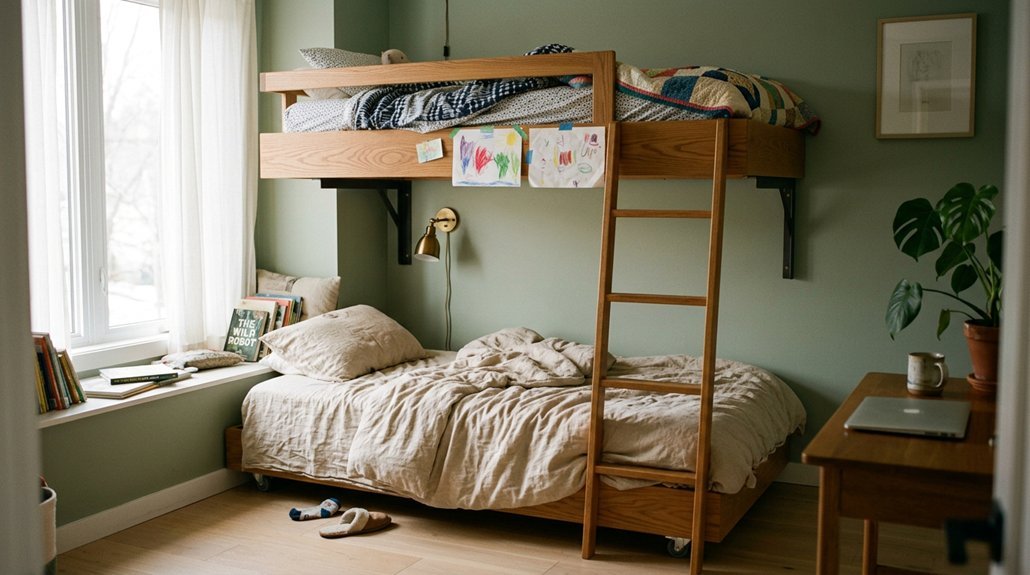
Before I recommend any bunk bed for your small room, I want to walk you through five practical points I’ve learned matter most: measuring your room dimensions first, using vertical space wisely, checking ladder placement options, figuring out storage integration needs, and confirming weight capacity requirements.
Each factor directly affects whether you’ll end up with a bed that fits well or one that creates daily frustration. I’ll break these down so you can judge each product fairly against what your space actually requires.
Room Dimensions First
Every inch matters when you’re squeezing a bunk bed into a tight space. I always measure length, width, and ceiling height before shopping. This prevents costly mistakes.
Low ceilings under 8 feet demand low-profile designs. These maximize headroom beneath the top bunk, making mornings less painful.
I check door swings, windows, and built-ins too. Blocking access creates daily frustration.
Comparing the bunk bed’s footprint to actual floor space prevents overcrowding. I multiply length by width for both room and bed, ensuring walking clearance remains.
Guardrail clearance matters for safety. I verify ample space above the top bunk for easy entry and exit. Tight vertical clearance risks bumped heads and awkward climbs.
Measure twice, buy once.
Vertical Space Usage
How do you squeeze two beds into one room without losing floor space? I stack them. Tall bunks maximize your floor area by building upward, not outward. This frees up room for desks, storage, or play areas below.
But vertical space isn’t unlimited. I check ceiling height first. Low-profile designs reduce clearance issues and improve headroom on top, which matters for comfort and safety. I also measure lower bed clearance and guardrail height. These affect how easily kids move and how safe they feel.
Integrated storage or under-bed clearance boosts efficiency further. You skip extra dressers or bins. Just position side ladders and guardrails carefully. They shouldn’t intrude into usable space or block access. Smart vertical planning turns cramped rooms into functional ones.
Ladder Placement Options
Since I need to fit the bed against a wall or leave walking room, I pay close attention to where the ladder sits. Most bunk beds let me choose left or right placement, which matters when I’m working around doors, windows, or existing furniture.
Side ladders give me flexibility in tight spaces. I can position the ladder away from high-traffic areas, keeping the floor clearer for movement.
I also check ceiling height before buying, since top-bunk ladders need enough overhead clearance for safe climbing. Reversible ladders and side-entry designs help when I’m squeezing two beds into one small room. These options let me flip the configuration based on my layout.
I prefer integrated ladders over detached ones. They stay stable and don’t shift, plus they leave more predictable space underneath for whatever I need below.
Storage Integration Needs
Where am I supposed to put everything when floor space is already tight? I look for bunk beds with built-in storage to maximize every inch.
Built-in Storage Options
Drawers, trays, or pockets integrated into the frame eliminate the need for extra furniture. I’ve found that under-bed clearance directly impacts storage capacity: beds with 12-inch clearances fit standard bins, while 16-inch clearances accommodate luggage or larger containers.
Daily Essentials Access
Storage pockets or hooks on bed frames keep glasses, chargers, and remotes within reach. These small features reduce clutter without requiring nightstands.
Safety Considerations
I verify that storage additions don’t compromise guardrails or ladder stability. Shelves near the top bunk need secure mounting to prevent accidents.
Combining storage with the bunk structure cuts standalone dresser needs, though I note that integrated drawers add assembly time and cost.
Weight Capacity Requirements
Because I don’t want the frame to give out mid-sleep, I check weight limits before anything else.
Upper bunks typically hold less weight than lower ones. I’ve seen models cap the top at 330 pounds while the bottom handles 400 or more. For adults or taller teens, I prioritize at least 350–400 pounds up top and 400-plus below.
Higher capacity on both levels cuts sagging risk. I also factor in stored items, keeping combined weight under stated per-bunk limits.
In multi-user spaces, reinforced frames with tested anti-slip slat systems distribute weight evenly and reduce movement. These features cost more, but they prevent the wobble and wear that cheaper builds develop.
Skipping this step invites instability. I verify numbers in product specs before considering any bunk bed.
Convertible Functionality Value
After I’ve confirmed a frame can handle the load, I look at how the bed might adapt over time.
Convertible 2-in-1 designs let me split a bunk into two separate beds. This matters when siblings outgrow sharing, or when I need guest space without buying new frames. Some models convert the lower bed to a single, freeing floor space for daytime use.
I check that guardrails stay intact in both setups. Safety shouldn’t disappear when I reconfigure.
The best convertible options reduce clutter by enabling storage-friendly arrangements when sleeping isn’t needed. I compare conversion difficulty: some require tools and time, others don’t. I weigh this against how often I’ll actually transform the bed. For growing families, convertibility often pays for itself by delaying replacement purchases.