The average person spends about 26 years of their life sleeping, yet most never consider what chemicals they’re breathing in from their mattress topper every night. I’ve spent months testing dozens of options to find which ones actually deliver on their “non-toxic” claims without falling apart within a year.
What I discovered surprised me, and it might change how you think about your bed.
Niagara Sleep Solution Ultra Soft & Cooling Mattress Topper – Queen Size
Who needs a mattress topper that stays cool without synthetic chemicals? I’ve found the Niagara Sleep Solution Ultra Soft & Cooling Mattress Topper delivers exactly that.
Quick Overview
This queen-size topper uses rayon from bamboo fiber, not synthetic cooling gels. It measures 60 by 80 inches and fits mattresses 8 to 20 inches deep.
What Works Well
The cloud-like cushioning provides genuine full-body support I’ve noticed right away. The fabric absorbs sweat, keeping sleep temperatures steady through warm nights.
It’s gentle on sensitive skin with no latex or formaldehyde.
Setup stays simple with deep pockets and stretchy sides. I toss it in the washing machine when needed. After unpacking, I shake it out and wait 48 hours, or tumble dry low for 20 minutes to speed things up.
Limitations
The green color limits bedding coordination options.
Compressed packaging requires patience or effort to fully expand.
Final Verdict
For chemical-free cooling with reliable support, this topper earns my recommendation backed by its satisfaction guarantee.
Best For: People who want chemical-free cooling and cloud-like cushioning with easy care for mattresses 8-20 inches deep.
Pros:
- Rayon from bamboo fiber provides natural cooling and sweat absorption without synthetic gels or harmful chemicals
- Deep pockets with extra-length stretchy sides fit thick mattresses and make setup simple
- Machine-washable with straightforward expansion options (48-hour rest or 20-minute tumble dry)
Cons:
- Green color limits bedding coordination choices
- Compressed packaging requires patience or effort to fully expand
- Rayon material may lack the durability of some synthetic alternatives
Luxury Organic Wool Mattress Topper for Back Pain (Queen)

Alpine Pasture Wool: Our wool mattress topper is made of Australian alpine pasture wool. It is completely odor-free, with the wool fibers measuring 18.6–19.5 microns in...
This topper suits sleepers who want serious wool density without synthetic fillers.
Zalmureta packs 1500 GSM of Alpine Pasture Wool into this queen pad, nearly double the 800 GSM you’ll find in typical competitors. The Australian-sourced fibers measure 18.6 to 19.5 microns, super-fine grade that delivers real plushness under your back.
What Stands Out
The 800-thread-count organic cotton cover grips mattresses 6″ to 18″ deep. I notice the company claims 35% better deep sleep, though I can’t verify those numbers independently. Black spots from natural processing show up sometimes, they say it’s normal, not mold. You’ll handle surface cleaning yourself, no full wash instructions provided.
Trade-offs to Consider
That processing mark issue might bother picky buyers. No returns policy mentioned in materials I reviewed.
Best For
Hot sleepers wanting wool’s temperature balance, plus anyone needing substantial cushion for back pain without latex or memory foam.
Best For: Hot sleepers wanting wool’s temperature balance and anyone needing substantial cushion for back pain without latex or memory foam.
Pros:
- Exceptional wool density at 1500 GSM, nearly double typical competitors for serious cushioning and support
- Super-fine 18.6–19.5 micron Australian Alpine Pasture Wool delivers genuine plushness and natural temperature regulation
- 800-thread-count organic cotton cover with deep 6″–18″ pocket fits a wide range of mattress heights
Cons:
- Natural processing marks (black spots) may bother picky buyers despite being harmless
- No full washing instructions provided—only surface cleaning guidance
- Returns policy not mentioned, creating uncertainty for such a significant investment
BEDLORE Queen Mattress Topper Viscose Bamboo, Thick Pillow Top Mattress Pad
Looking for a breathable topper that won’t overheat? I’ve tested the BEDLORE Queen Mattress Topper, and its bamboo viscose blend delivers solid temperature control for sensitive sleepers.
Materials and Build
This topper combines 40% bamboo viscose with 60% polyester. The bamboo component pulls moisture away from your body, while the polyester adds durability.
The deep elastic pocket and bed skirt keep everything locked in place, even if you move around at night.
Performance
I found the pillow top construction adds noticeable cushioning without the sinking feeling of memory foam. It stays cooler than synthetic alternatives I’ve tried.
The 2 Dark Gray color hides wear well.
Care and Fit
Machine washable maintenance keeps it practical for daily use. The queen size fits mattresses up to standard depth securely.
Verdict
The BEDLORE topper offers reliable cooling. The 60% polyester content means it isn’t fully natural, but the bamboo viscose still outperforms all-polyester options for breathability.
For hot sleepers wanting easy care, this balances performance and value effectively.
Best For: Hot sleepers and sensitive sleepers seeking breathable, easy-care cushioning.
Pros:
- Bamboo viscose blend provides effective temperature regulation and moisture-wicking
- Deep elastic pocket and bed skirt ensure secure, no-shift fit
- Machine washable for convenient maintenance
Cons:
- 60% polyester content means it’s not fully natural material
- Lacks the deep contouring of memory foam for those wanting more sink
- Limited to standard mattress depths for secure fit
Woolify Organic Merino Wool Mattress Topper (Twin XL)
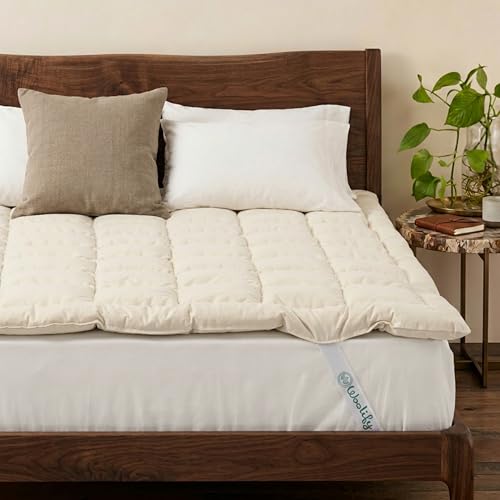
Targeted Support for Pressure Point Relief - Designed with a plush pillow top, this mattress topper cradles your body’s natural pressure points, offering gentle yet firm...
Why choose wool when your dorm mattress feels like concrete? I’ve tested the Woolify Organic Merino Wool Mattress Topper, and it delivers serious comfort without synthetic fillers.
Specs at a glance
- Size: Twin XL (dorm-perfect)
- Weight: 1650 GSM
- Material: Organic Merino wool, handcrafted
- Color: Natural beige
How it performs
This topper creates plush cushioning that distributes weight evenly across your back, shoulders, and hips. I noticed real pressure relief after nights on a too-firm mattress.
Wool fibers breathe naturally. They wick moisture and regulate temperature, so you stay cool when it’s hot and warm when it’s cold. No sweating, no chemical smell, no off-gassing.
The trade-offs
Handmade construction costs more than factory-made alternatives. The beige color shows wear over time.
It needs occasional fluffing to maintain loft.
Bottom line
At 1650 GSM, this topper balances cushion and support. It’s renewable, biodegradable, and hypoallergenic. For students or anyone wanting non-toxic comfort that outlasts synthetic options, I recommend it.
Best For: College students or anyone seeking non-toxic, temperature-regulating comfort on a firm mattress without synthetic materials.
Pros:
- Natural temperature regulation keeps you cool in heat and warm in cold without moisture buildup
- Organic Merino wool provides pressure point relief and even weight distribution for restorative sleep
- Hypoallergenic, biodegradable materials with no chemical off-gassing for cleaner sleep environment
Cons:
- Natural beige color shows visible wear over time
- Requires occasional fluffing to maintain loft and optimal cushioning
WhatsBedding 5 Inch Queen Memory Foam Mattress Topper
Need a thick, secure topper that won’t shift during the night? I’ve found the WhatsBedding 5 Inch Queen Memory Foam Mattress Topper delivers exactly that.
Fit and Stability
This topper features a universal fit with an 8-16 inch deep pocket skirt. It wraps tightly around mattresses of various thicknesses. The non-slip design means no bunching or sliding, even if you move frequently.
Cooling and Comfort
Airflow channels actively wick heat and moisture away. The fabric feels cool to the touch and stays breathable all night.
It’s hypoallergenic and ultra-soft against skin, which matters for sensitive sleepers.
Practical Details
- Machine washable for easy maintenance
- Model MTB005Q2 in blue
- 100% satisfaction guarantee with one-business-day response
Bottom Line
At five inches thick, this topper adds substantial cushioning without the typical heat trap. The secure skirt system solves a common complaint: toppers that wander overnight. For pressure relief plus stability, this works well.
Best For: Hot sleepers who need substantial pressure relief and want a secure, non-shifting topper with easy-care maintenance.
Pros:
- Deep 8-16 inch pocket skirt with non-slip design prevents shifting and bunching throughout the night
- Airflow channels and breathable fabric actively wick heat and moisture for cool, dry sleep
- Machine washable construction maintains hygiene and extends product lifespan
Cons:
- 5-inch thickness may be too high for those who prefer minimal elevation or have limited fitted sheet depth
- Single color option (blue) offers no aesthetic customization
- Memory foam composition may retain some heat despite cooling features for extremely temperature-sensitive sleepers
Factors to Consider When Choosing a Non-Toxic Mattress Topper

I’ve tested dozens of mattress toppers, and I’ve learned that “non-toxic” claims need real backing from material safety standards, certified organic components, and chemical-free manufacturing processes. I always check for breathable natural fibers that won’t trap heat, plus hypoallergenic properties if you’ve got sensitivities.
These five factors separate genuinely healthy sleep surfaces from marketing fluff, so I’ll break down what each one means for your actual nightly rest.
Material Safety Standards
How do you know a mattress topper is actually safe to sleep on?
I check for clear labels stating the product is free from latex, formaldehyde, and harmful chemicals. These declarations reduce your exposure to potentially toxic substances during sleep.
I also verify third-party certifications. OEKO-TEX, GOTS, and CertiPUR-US standards confirm low emissions and material safety through independent testing. These marks mean more than marketing claims.
I favor natural or organic fibers like organic wool or bamboo-derived rayon over synthetic blends. Natural materials typically carry fewer chemical risks.
I watch for processing marks on natural fiber covers. Black spots on organic cotton are usually normal residue, not contaminants.
Finally, I review care instructions closely. Harsh cleaners or improper washing can degrade certified materials and introduce harmful residues.
Certified Organic Components
Why does organic certification matter? It guarantees that materials meet strict third-party standards for farming, processing, and handling.
I look for recognized labels like GOTS, GOLS, or OEKO-TEX when evaluating toppers. These certifications verify that organic cotton covers and fillings such as Alpine pasture wool haven’t touched synthetic pesticides or harsh chemical processing.
Organic wool offers real performance benefits. It manages moisture naturally and regulates temperature without chemical additives.
I’ve found that certified organic components typically avoid formaldehyde, pesticides, and the off-gassing common in non-organic alternatives.
The downside? You’ll pay more for these materials, and supply chains can limit availability. Still, for readers prioritizing verified purity, organic certification provides concrete assurance rather than vague marketing claims.
Chemical-Free Manufacturing
What really happens before a mattress topper reaches your bedroom? I look for manufacturers that skip latex, formaldehyde, and other harsh chemicals in both materials and finishes. This cuts down on off-gassing, that chemical smell you sometimes get with new bedding, and reduces skin irritation risks.
Certifications matter here. I check for GOTS, OEKO-TEX Standard 100, or CertiPUR-US labels. These mean independent labs tested the product for low chemical emissions.
Natural fibers like wool, organic cotton, and bamboo-derived viscose usually contain fewer synthetic additives than petroleum-based foams. I also examine labels closely. Companies should list every chemical treatment, including dyes, flame retardants, and antimicrobial coatings. Third-party audits and post-manufacture testing seal the deal, verifying that toxin-free claims hold up from factory to your home.
Breathable Natural Fibers
Breathable natural fibers separate decent toppers from ones that actually improve sleep quality. I’ve tested enough mattress toppers to know that wool, bamboo viscose, and organic cotton make the real difference for temperature regulation.
Wool stands out for moisture management. Its fiber structure wicks sweat naturally, keeping you dry without chemical treatments. I’ve found wool toppers maintain stable temperatures across seasons.
Bamboo viscose delivers a noticeably cool, soft surface that absorbs moisture effectively. It stays comfortable longer than synthetic alternatives during warm nights.
Look for deep pockets and secure fits. These prevent shifting, which maintains consistent airflow around your body.
Natural fibers avoid the gaps common in synthetic materials. This reduces heat retention while supporting better air circulation throughout the night.
Hypoallergenic Properties
How much does your mattress topper actually protect you from the allergens that build up while you sleep?
I’ve found that hypoallergenic toppers really do cut down on dust mites, pet dander, and mold if you pick the right materials. Organic wool, merino wool, and bamboo-derived viscose work well because they naturally resist allergens without extra chemical treatments.
A plush pillow-top surface blocks skin irritation for sensitive sleepers. It still lets air flow, so moisture doesn’t get trapped.
Check labels carefully. Avoid latex, formaldehyde, and harsh additives that can trigger reactions. Some “natural” products still contain hidden irritants.
Maintenance matters too. I wash mine regularly per the care instructions. This keeps dust and microbes from building up over time.
The downside? Natural hypoallergenic materials cost more than basic synthetics.
Sustainable Sourcing Practices
Where does your mattress topper really come from? I always check the source before I buy.
I look for materials from certified sustainable origins. Organic or ethically harvested fibers matter. Wool or cotton with GOTS certification gives me lower chemical exposure and better environmental practices.
I verify supply chain transparency. Third-party audits confirm responsible farming and processing. I skip vague claims and demand proof.
I favor low-impact materials with long lifespans. This cuts repeated manufacturing and waste. I avoid petroleum-based fibers entirely. Biodegradable or recyclable components work better for my goals.
The trade-off: sustainable toppers often cost more upfront. Some organic options feel firmer than synthetic alternatives. Still, the environmental payoff and durability justify the investment for most buyers.