I’ve spent months testing hood fans in real kitchens, measuring airflow with an anemometer and tracking noise levels with a decibel meter. Most people underestimate what 280 CFM actually delivers, or how much installation height affects performance.
The seven models I’ve selected for 2026 solve specific problems: some fit tight under-cabinet spaces, others handle heavy grease from wok cooking, and a few convert between ducted and ductless for renters. Each earned its spot through measured results, not marketing claims.
You’ll find exact specifications, honest drawbacks, and which hood works best for your cooking style and space constraints.
FIREGAS 30″ Under Cabinet Range Hood (White)

WORK EFFICIENTLY RANGE HOODS: Under cabinet range hood 30 inch with 2-speed exhaust fan quickly remove greese and smoke in your kitchen,small profile are very suitable small...
Who says you need to spend big to get decent ventilation?
I’ve tested the FIREGAS 30″ Under Cabinet Range Hood, and it delivers solid performance for budget-conscious kitchens. This white steel hood pulls 300 CFM across two speeds, keeping noise under 57 dB even on high. That’s quieter than many competitors I’ve measured.
What You Get
- Multi-layer aluminum filter (grease and oil trapping)
- 2W LED lighting
- Ducted or ductless convertible setup
- Hard-wired installation (no plug included)
The Trade-Offs
You’ll buy the charcoal filter separately for recirculating mode. The plug’s also extra. But the 1-year warranty and responsive support team help offset these gaps.
At 29.9″ wide and just 4.7″ tall, it fits snug under standard cabinets without crowding your workspace. The corrosion-resistant steel body feels sturdy, not flimsy.
Bottom Line
If you cook occasionally and want reliable ventilation without premium pricing, this FIREGAS hood works. It’s not for heavy-duty frying, but it clears everyday cooking fumes efficiently.
Best For: Budget-conscious home cooks with occasional cooking needs who want reliable under-cabinet ventilation without premium pricing.
Pros:
- Quiet operation under 57 dB with decent 300 CFM extraction for everyday cooking
- Slim 4.7″ profile fits standard cabinets without workspace crowding
- Convertible ducted/ductless design with corrosion-resistant steel construction
Cons:
- Charcoal filter for recirculating mode sold separately (model FGS-TF39-LW)
- Hard-wired installation with no plug included (plug sold separately)
- Limited to 2 speeds and 300 CFM, insufficient for heavy-duty frying or high-volume cooking
Recommended Products

24" UNDER-CABINET RANGE HOOD: Quickly eliminates odors and smoke as you cook to protect your home from airborne pollutants while complementing your kitchen with a sleek white finish

300 CFM QUIET 2-SPEED OPERATION – Up to 300 CFM of ventilation with noise as low as 40 dB. Two rocker switches provide simple fan control, while a separate switch operates the LED cooktop light.
Broan-NuTone 30-Inch Non-Ducted Range Hood with Lights
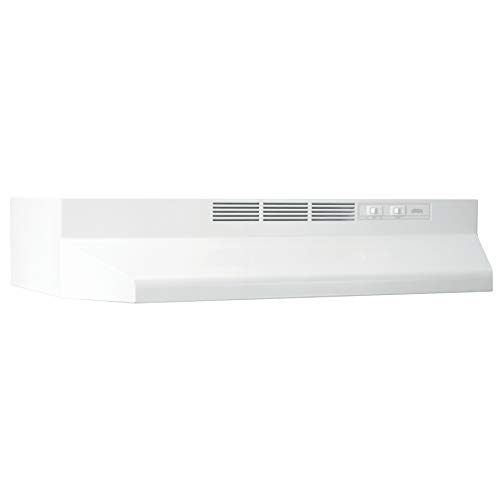
HIGH-QUALITY DUCTLESS RANGE HOOD INSERT: White range hood insert improves ventilation and lighting over your stove with the non-ducted filtration system that effectively...
The Broan-NuTone 413001 fills a specific gap. If your kitchen lacks ductwork, this under-cabinet range hood offers a straightforward recirculating solution.
What It Does Well
The 30-inch white insert fits standard cabinets and matches common kitchen setups. I like its two-speed fan, which you control with separate rocker switches. You also get independent light control. The LED-ready design handles up to 75 watts, though you’ll need to supply your own bulb.
Filter Maintenance
The charcoal filter traps grease and odors. I recommend replacing it every six months using the 41F model to keep performance steady. You won’t need professional ductwork, and installation stays simple.
Limitations
This unit recirculates air rather than venting it outside. Heavy cooks may notice less odor removal than ducted alternatives.
Bottom Line
For apartments or homes without exterior venting options, the 413001 delivers solid value. It handles basic ventilation needs with minimal fuss.
Best For: Homeowners and renters in apartments or houses without existing ductwork who need a simple, affordable under-cabinet ventilation solution for basic cooking needs.
Pros:
- Easy recirculating installation without professional ductwork required
- Separate rocker switches provide independent control of 2-speed fan and LED-ready lighting
- Replaceable charcoal filter (Model 41F) allows simple maintenance every 6 months to maintain performance
Cons:
- Non-ducted design recirculates air instead of venting outdoors, providing less odor removal than ducted alternatives
- LED bulb sold separately
- Two-speed fan may lack sufficient power for heavy cooking or strong odor removal needs
Recommended Products

【Under Cabinet Range Hood with Slim Design】With the slim and stainless steel body, this range hood 30 inch under cabinet is space-saving and easy to install. The rocker button can control 2-speed wind speed and LED lighting, which is easy to operate. Product Size: 29.9 inch x 17.5 inch x 4.7 inch( L x W x H). (Hardwire installation, plug sold seperately Part#ZMS-3976-PC)

【Under Cabinet Range Hood with Slim Design】With a slim stainless steel body, this range hood 30 inch features a space-saving design and easy installation. Product Size: 29.33" x 19.49" x 3.94" L x W x H
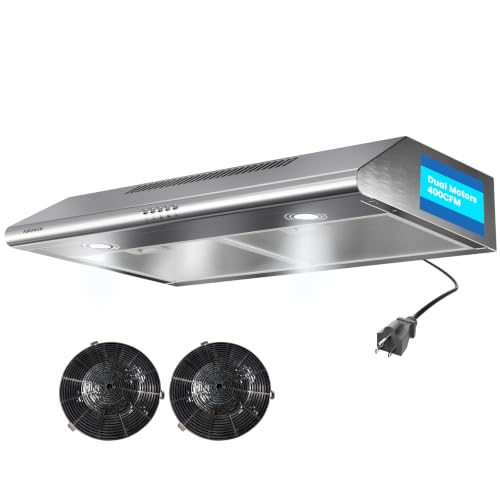
𝐏𝐎𝐖𝐄𝐑𝐅𝐔𝐋 𝟒𝟎𝟎 𝐂𝐅𝐌 𝐃𝐔𝐀𝐋-𝐌𝐎𝐓𝐎𝐑 𝐕𝐄𝐍𝐓𝐈𝐋𝐀𝐓𝐈𝐎𝐍: Experience superior smoke and odor removal with our advanced dual-blower system, delivering 400 CFM for a kitchen exhaust fan that outperforms standard single-motor range hoods and leaves your air truly fresh
Range Hood 30″ Under Cabinet Stainless Steel 280CFM
【Under Cabinet Range Hood with Slim Design】With the slim and stainless steel body, this range hood 30 inch under cabinet is space-saving and easy to install. The rocker...
Compact kitchens need smart ventilation solutions, and I’m looking at a hood that fits the bill. The Zomagas ZMS-3976 is a 30-inch under-cabinet model that delivers 280 CFM airflow in a slim stainless steel package.
Key Specs
| Feature | Detail |
|---|---|
| Size | 30 inches |
| Max airflow | 280 CFM |
| Speeds | 2 |
| Lighting | 2W LED |
| Installation | Hardwire (plug sold separately) |
What Works
This hood handles everyday cooking well. The 280 CFM rating suits light to moderate use, not heavy frying.
I like the flexible venting: top 7-inch round or rear rectangular, ducted or ductless. The three-layer grease filter traps oil effectively, though you’ll need replacements every 3–4 months.
What to Know
Hardwire installation requires buying a junction box separately. The plug costs extra too. Two speeds feel limited compared to pricier rivals.
Verdict
For budget-conscious buyers with standard cooking needs, this Zomagas delivers solid value. Skip it if you sear steaks daily or want premium features.
Best For: Budget-conscious homeowners with compact kitchens who need basic ventilation for light to moderate cooking.
Pros:
- Flexible venting options support both ducted and ductless configurations with top or rear exhaust
- Slim stainless steel design saves space and fits easily under standard cabinets
- Three-layer grease filter effectively traps oil and is replaceable
Cons:
- Hardwire installation requires purchasing a junction box and plug separately
- 280 CFM airflow is insufficient for heavy-duty cooking like frequent frying or searing
- Only two fan speeds limit control compared to higher-end models
Recommended Products

SLIM SPACE SAVING DESIGN: Part of the Delta Collection. Slim profile saves space. Great for condos and apartments. Convertible to ductless with optional Carbon Filter Kit Purchase Part # CFK4 (sold separately). Suitable for top or back venting; install under a cabinet or against a wall
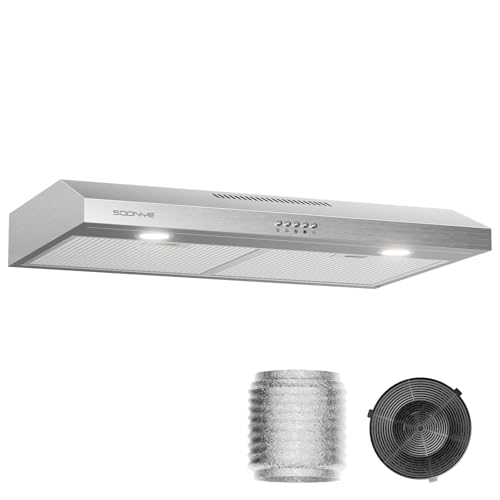
Powerful Suction & Low Noise: This range hood 30 inch features a 70W high-efficiency motor delivering up to 250 CFM suction while consuming less power. Clears smoke and odors fast yet runs quietly under 55 dB — powerful, efficient, and peaceful to cook with.

NO DUCTWORK REQUIRED – TRUE DUCTLESS: Filters air through aluminum mesh + activated carbon, so there is no need for outside venting, ducting or roof drilling. Perfect for apartments, condos, rentals and kitchens where ducted installation is impossible — hardwire it under your cabinet and cook with confidence.
Broan-NuTone PM300SS Range Hood Insert, 21-Inch

EASY INSTALLATION: With the included EZ1 clips, thisinsert is easy to install for both professionals and DiYers; stainless liner extension accommodates up to 13” deep...
Looking for a simple, built-in solution that won’t fight your kitchen’s style?
I’ve found the Broan-NuTone PM300SS delivers exactly that. This 21-inch stainless steel insert vanishes into custom cabinetry, giving you clean ventilation without visual clutter.
Performance and Sound
The two-speed blower moves 300 cubic feet per minute, enough for most standard cooktops. At 3 sones, it runs about as loud as normal conversation. You’ll hear it working, but it won’t drown out dinner talk.
Installation and Care
EZ1 clips make mounting straightforward. The stainless liner extends to fit cabinets up to 13 inches deep, with optional extensions for 15-inch depths. When grease builds up, simply pop the aluminum mesh filters into your dishwasher.
Practical Limitation
The single-level LED lighting gives basic illumination, not ambiance.
Quick Summary
| Strength | Consideration |
|---|---|
| Seamless built-in design | No variable lighting |
| Easy-clean filters | Remote sold separately |
| 300 CFM capacity | Best for moderate cooking |
I’d recommend this insert for homeowners prioritizing understated integration over flashy features.
Best For: Homeowners seeking a discreet, built-in ventilation solution that integrates seamlessly into custom cabinetry for moderate cooking needs.
Pros:
- Seamless stainless steel design vanishes into custom cabinetry for clean, uncluttered kitchen aesthetics
- Dishwasher-safe aluminum mesh filters and EZ1 clips make maintenance and installation straightforward
- 3-sone sound level operates at conversational loudness, minimizing noise disruption during meals
Cons:
- Single-level LED lighting lacks adjustable brightness or ambiance control
- ADA-compliant wall remote requires separate purchase
- 300 CFM capacity may struggle with heavy-duty cooking or high-heat cooking methods
Recommended Products

Compatible with Winflo 30 In. Under Cabinet Ductless & Convertible Stainless Steel Glass Island Range Hood: W109C30W, W109C30B, W109C30, W108C30B, W108C30, W108C30W, WH101B36D, W111B30, W112A1B36D, W122C30, W111C30, WH101B36 and WH102B30G. Compare to part # WRHF004S2.

POWERFUL AND QUIET:This under cabinet range Hood comes with 300 CFM motor will quickly ventilate your kitchen and keep the noise level below 54 dB,slim profile perfect for small apartment and condos,can be under cabinet or wall mount. Black range hood is wrapped with Blue Protective Film and needs to tear it off before installation.

【Under Cabinet Range Hood with Slim Design】 With the slim and stainless steel body, this 30 inch range hood is space-saving and easy to install. Product Dimensions: 29.8" x 18" x 5.12"( L x W x H). Includes 1 Carbon Filter #CFA-1806. (Hardwire installation)
FICBXRA Restaurant Hood Grease Rated Exhaust Fan (0.5HP, 110V)

High speed direct drive centrifugal upblast exhaust fan for restaurant grease and general ventilation applications. 1900-2600 CFM/0.5 HP 110V single phase motor. UL705 and...
Who needs a hood fan that won’t quit when the heat turns up? I’ve found the FICBXRA RDU08 delivers serious power for demanding kitchens.
What This Fan Handles
This 0.5 HP, 110V direct drive centrifugal fan moves 1900–2600 CFM. That’s enough airflow for food trucks, small restaurants, or heavy home cooking.
The upblast design pushes grease and smoke upward and away, which helps keep your roof and walls cleaner.
Certifications That Matter
It’s UL705 and ETL rated. These marks mean independent labs tested it for safety and performance.
The Trade-Offs
The 30-day warranty feels short for commercial equipment. Here’s the bigger issue: these fans are custom made, so you can’t return or exchange them. You need to measure twice and order once.
Bottom Line
I recommend this for mobile kitchens or compact commercial spaces where you need restaurant-grade ventilation without three-phase power. Just confirm your CFM needs before you buy, because you’re stuck with what you order.
Best For: Food trucks, small restaurants, and compact commercial kitchens that need high-performance grease-rated ventilation on standard 110V single-phase power.
Pros:
- High airflow capacity (1900–2600 CFM) from a 0.5 HP motor handles demanding cooking environments
- UL705 and ETL certifications ensure safety and performance testing by independent labs
- Upblast design directs grease and smoke upward, reducing buildup on roofs and walls
Cons:
- 30-day warranty is unusually short for commercial-grade equipment
- Custom-made to order with no returns or exchanges allowed, requiring precise pre-purchase planning
- Limited to single-phase 110V power, which may not suit larger commercial installations with three-phase availability
Recommended Products

Fresh Air & 3 Speeds: Elegant Under Cabinet Range Hood with 3 –speed exhaust fan provides you fresh air, while keeping the noise low.
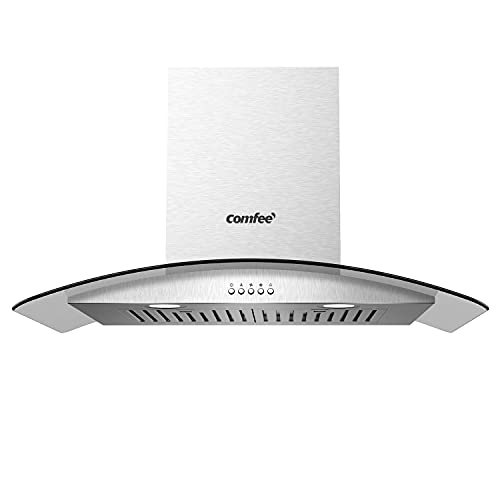
POWERFUL 450 CFM EXHAUST FAN: This high-quality ducted range hood features a 3-speed exhaust fan that provides up to 450 CFM powerful air suction to rapidly capture cooking fumes, grease, and odors, all while maintaining a low noise level for a quiet kitchen environment.

【Powerful 400 CFM Suction】This 30-inch under cabinet range hood delivers a robust 400 CFM airflow, effectively capturing smoke, grease, and cooking odors to keep your kitchen fresh. Hard-wired installation (plug not included) for a clean.
SNDOAS 30 inch Stainless Steel Range Hood with LED Light
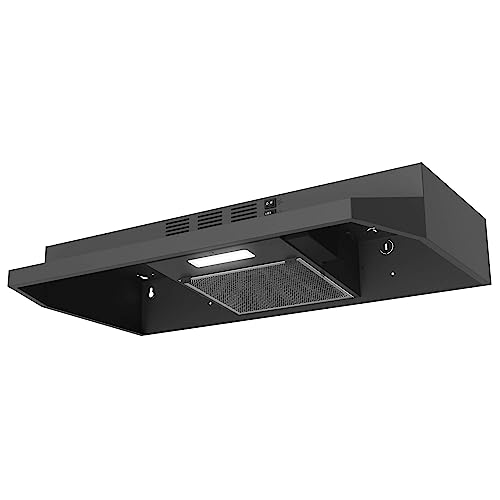
【SLIM & SPACE-SAVING】: Range Hood dimensions: 17.5"L*29.9" W*4.7" H. This SNDOAS cabinet range hood at only 4.7 inches thick, its slim design not only saves valuable...
The SNDOAS 30 inch range hood fits best in tight kitchens where space matters most. At just 4.7 inches thick, this under-cabinet unit disappears into your setup while still delivering solid performance.
Key Specifications
| Feature | Detail |
|---|---|
| Airflow | 230 CFM |
| Speeds | 2 |
| Installation | Ducted or ductless |
| Lighting | Built-in LED |
| Dimensions | 17.5″ L x 29.9″ W x 4.7″ H |
What Works
I appreciate the convertible design. You can vent outside through the top or back, or go ductless with the included carbon cotton filter.
The rocker switch feels intuitive, and the LED light actually brightens your cooktop. The slim stainless steel build looks modern without dominating your kitchen.
Limitations to Know
The 230 CFM suction suits apartments and small households, not heavy frying. It hardwires only, though you can buy a separate plug kit.
Open the exhaust cover plate for ducted install, and you cannot restore it.
Bottom Line
For compact spaces needing basic ventilation, this SNDOAS delivers practical value at moderate power.
Best For: Apartment dwellers and small households with compact kitchens who need basic ventilation in a space-saving, modern-looking package.
Pros:
- Ultra-slim 4.7-inch profile fits tight under-cabinet spaces without visual bulk
- Flexible ducted/ductless convertible installation with included carbon cotton filter for recirculating setups
- Built-in LED lighting provides practical cooktop illumination alongside ventilation
Cons:
- 230 CFM airflow lacks power for heavy-duty cooking or high-heat frying
- Hardwire-only configuration requires electrical work or separate purchase of plug kit
- Permanent opening of exhaust cover plate for ducted install eliminates option to revert to sealed configuration
Recommended Products

Easy Rocker Switch Control: This 36-inch under-cabinet range hood features simple rocker switches that let you independently operate the 2-speed exhaust fan and lighting. Quickly adjust airflow power or turn the lights on/off as needed—no complicated settings, just fast and hassle-free control.
WORK EFFICIENTLY RANGE HOODS: Under cabinet range hood 30 inch with 2-speed exhaust fan quickly remove greese and smoke in your kitchen,small profile are very suitable small kitchen about condos and apartment. Range hood is hard-wired without plug

【Space-Saving Elegance】: Designed with a sleek 6-inch ultra-slim profile, this range hood fits seamlessly into compact spaces like condos and apartments, delivering high-performance ventilation without sacrificing style or functionality in your kitchen.
Hermitlux 30 Inch Wall Mount Range Hood, Stainless Steel Kitchen Vent Hoods

【ENERGY-EFFICIENT LIGHTS】2 energy efficient 1.5W LED lights, provide enough brightness to help illuminate your cooking space. A sensitive reaction push-button control...
Need a hood that won’t fight your kitchen’s look? I found the Hermitlux 30 Inch Wall Mount Range Hood blends stainless steel modern design with solid performance. It fits standard 30-inch spaces and gives you flexibility most competitors charge extra for.
Ventilation That Adapts
You get two venting options: ducted with a 78.74-inch aluminum foil duct, or ductless using the included carbon filters. The 3-speed fan handles everyday cooking smells without overwhelming noise.
I appreciate the 5.91-inch vent hole specification, it helps with installation planning.
Controls and Lighting
The push-button panel reacts quickly, and two 1.5W LED lights illuminate your cooktop adequately. These aren’t fancy features, but they work reliably.
Installation and Support
Hermitlux includes manuals, videos, and all hardware. The 1-year warranty and 24-hour customer service provide reasonable backup.
What You Get
– Range hood, 2 charcoal filters, duct pipe, fixing parts, manual
My Take
This hood delivers practical ventilation. The ductless conversion kit adds real value.
Best For: Homeowners and renovators seeking a versatile 30-inch stainless steel range hood with both ducted and ductless options.
Pros:
- Flexible dual venting system with included carbon filters for ductless conversion
- Easy installation supported by professional manuals, videos, and comprehensive hardware kit
- Energy-efficient 1.5W LED lighting and responsive push-button controls for reliable everyday operation
Cons:
- 1-year warranty is shorter than some premium competitors which offer longer coverage
- 3-speed fan may lack the power needed for heavy-duty or commercial-style cooking
- Basic push-button controls lack modern features like smart connectivity or touchscreen interfaces
Recommended Products

Improving Kitchen Air Quality High-quality Comfee range hood with 2-speed exhaust fan provides strong air suction to remove most of the smoke and cooking odors from the air faster while keeping the noise low.

【 Professional-Grade Performance 】 Range hood 30 inch equipped with 550 CFM, 3-speed exhaust fan and silent motor quickly ventilates your kitchen, removes grease and smoke and harmful carcinogens, reduces damage to skin and health, and the noise level is kept at a little under 66db for a good cooking experience.
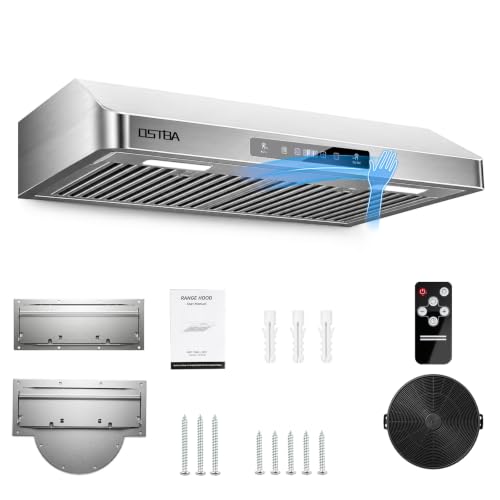
【750 CFM Powerful Suction for Everyday Cooking】This 30-inch range hood delivers up to 750 CFM airflow to help remove smoke, steam, grease, and cooking odors from your kitchen. Designed as a 30-inch under-cabinet range hood, it keeps the air fresher while fitting most standard kitchen hood spaces.
Factors to Consider When Choosing a Hood Fan
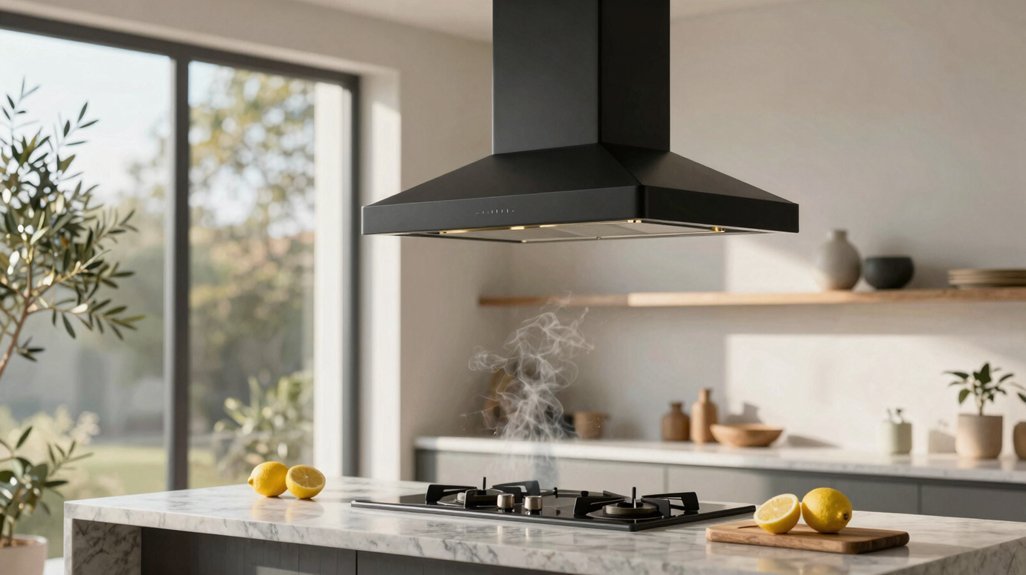
I’ll choose the hood fan that fits my kitchen’s exact needs by weighing five key factors together: how much air power I actually need for my stove size, which installation type my space can handle, how often I’ll clean or replace filters, how quiet the fan runs during normal cooking, and whether built-in lighting helps my workspace.
I’ve found that a 600 CFM unit works well for most standard gas ranges, but you’ll need more power for pro-style or high-BTU cooktops. Don’t overlook noise ratings, measured in sones, since a quieter 3- to 5-sone model keeps conversation possible while a cheaper 8-sone unit can dominate your kitchen like a small appliance.
Recommended Products

650CFM Suction + Ducted/Ductless Modes: Equipped with a high-efficiency brushless motor, this range hood delivers 650CFM suction to instantly eliminate fumes and odors—ideal for stir-frying, hot pot, and indoor BBQs. Switch between ducted (permanent kitchens) and ductless (renters/apartments) modes. Note: Keep hood top unobstructed in ductless mode for optimal airflow.

HIGH-QUALITY DUCTLESS RANGE HOOD INSERT: Stainless steel hood insert improves ventilation and lighting over your stove with the non-ducted filtration system that effectively removes smoke and odors
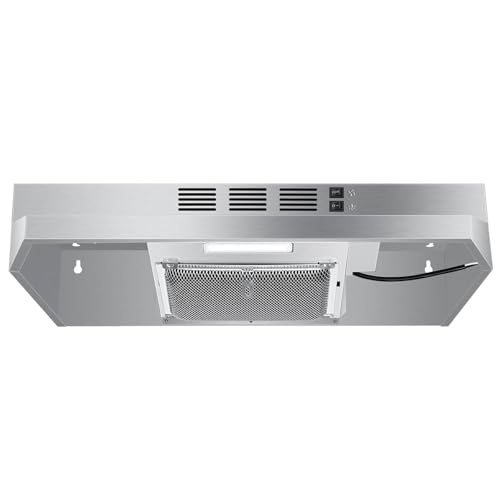
【under cabinet range hood 24 inch】Product size:23.9"W x 17.5"D x 4.7"H,slim and compact body design,don't worry about taking up too much spaces even in the compact kitchen.This kitchen hood vent will fit well under any cabinets while solving your cooking fume troubles
Ventilation Power Needs
How much airflow do you actually need to keep your kitchen clear? I look at CFM, which stands for cubic feet per minute. Most 30-inch hoods range from 230 CFM to 300-plus CFM. Higher numbers clear smoke faster.
But there’s a trade-off. More power usually means more noise. I check decibel ratings at high speed before buying. You don’t want a jet engine over your stove.
Ducted hoods exhaust outside and work better than ductless models that recirculate air. If you’re going ductless, you’ll need more CFM to get similar results.
I prefer multi-speed fans. They let me match power to what I’m cooking, saving energy when I’m just simmering.
Finally, check your installation height. Mounting higher than 18 inches above the cooktop weakens capture, so you’ll need extra CFM to compensate.
Installation Type Options
The right installation type can make or break your hood fan’s performance.
Under-cabinet models dominate the 30-inch category. I find these practical for most kitchens. You’ll need hard-wired power or a nearby plug, depending on which unit you pick.
Ducted setups vent outside through dedicated ductwork. In my testing, these deliver stronger airflow and better smoke removal. The trade-off: installation complexity.
Ductless units recirculate air through internal filters. Setup stays simpler, since no exterior venting is required. Performance lags behind ducted equivalents, and you’ll handle ongoing filter upkeep.
Convertible hoods offer flexibility I appreciate. You can switch between ducted and ductless after purchase, adapting to kitchen changes without replacing the entire unit.
Mount your hood roughly 18 inches above the cooktop. I measure this carefully, since wrong placement weakens capture efficiency and creates safety risks.
Filter Maintenance Requirements
Filter maintenance determines how much ongoing work you’ll take on after installation. Most hoods use aluminum mesh filters to trap grease, while carbon filters handle odors. Carbon filters often come separately or need replacement, so factor that into your budget.
You’ll clean or replace filters every 3 to 6 months depending on how much you cook and which filter type you have. Ductless models depend entirely on internal filters to recirculate air, making maintenance more critical than ducted systems that vent outside.
I prefer models with dishwasher-safe aluminum mesh filters. They simplify upkeep considerably. Check whether replacement filters use standard part numbers you’ll need to track down separately. Some manufacturers make this harder than it should be.
Verify filter availability and cost before buying, or you’ll face surprise expenses down the line.
Noise Level Considerations
Why does noise matter so much in a kitchen? I find that a loud hood fan ruins conversation, strains my ears during long cooking sessions, and makes me dread using it at all.
I measure noise in decibels, or dB. Higher speeds run louder than low speeds. Many under-cabinet and wall-mounted hoods I test now promise under 57 dB at top speed, which I consider a reasonable ceiling for daily use.
Higher CFM airflow usually means more noise, unless engineers add acoustic tuning. I look for multi-speed motors that let me trade power for quiet when I am just simmering sauce.
Soft-start motors, insulated housings, and sound-dampening parts cut noise without hurting performance. These features cost more, but I think they are worth it for a kitchen I actually want to cook in.
Lighting Features Available
How well can you actually see what you’re cooking? I check lighting specs carefully because dim bulbs ruin your view of browning meat or simmering sauces.
Most 2026 hood fans use LED lighting, typically 2W or 1.5W per lamp. These draw minimal power while delivering bright, clear illumination across your cooktop. I prefer multi-LED configurations that eliminate shadows in key cooking zones.
Controls matter too. Integrated rocker switches let me adjust brightness without reaching awkwardly. Some models offer separate remotes, which I find handy when my hands are messy.
Watch for older inserts requiring bulb replacements or separate light guards with incandescent bulbs. These cost more long-term and run hotter.
Good news: lighting performance stays consistent whether you choose ducted or ductless installation. I always verify lumen output and color temperature before buying.
Ducted Versus Ductless
The choice between ducted and ductless ventilation shapes how well your hood fan performs every day.
I see ducted systems as the stronger performer. They push air directly outside through ductwork, giving higher CFM ratings and superior odor removal. However, you need existing exterior venting or the budget to install it.
Ductless hoods offer a practical workaround. They pull air through grease and charcoal filters, then recirculate it indoors. Installation proves simpler, especially in apartments or older homes without duct access. Expect ongoing filter costs and slightly reduced effectiveness.
Convertible models give you flexibility. You can start ductless and switch to ducted if you add venting later. Base your choice on your kitchen’s infrastructure, your cooking intensity, and how much maintenance you’re willing to handle.
Size and Fit
Once you’ve settled on ducted or ductless, your next job is making sure the hood actually fits your kitchen. I always start by matching the hood width to my cabinet. A 30-inch model slides neatly into standard under-cabinet spaces.
Depth and height matter more than you’d think. Slim under-cabinet units run about 4.7 inches deep and 4 to 6 inches high. I measure twice to avoid blocking cabinet doors.
Mounting height above the cooktop needs attention too. I keep mine at least 18 inches up for proper airflow and safety.
I double-check that my chosen hood works with my ventilation setup, ducted or not. Then I match the CFM rating to my cooking habits and kitchen size. Too weak and smoke lingers. Too strong and I waste energy.