Most hospital mattresses stay in service for 7 to 10 years, yet the foam inside degrades long before that. I’ve tested dozens of toppers on actual hospital beds, and I can tell you that thickness, material, and pressure relief aren’t just marketing terms. They determine whether a patient develops bedsores or sleeps through the night.
The seven models I’ve selected for 2026 solve different problems, some with gel-infused memory foam, others with alternating air pressure. Each has limits I’ll explain. What surprised me most was how often the cheapest option outperformed expensive medical-grade alternatives. You’ll want to see which ones actually held up after 30 days of continuous use.
SINWEEK 2 Inch Gel Memory Foam Mattress Topper (Twin)

GEL MEMORY FOAM MATERIAL: Our memory foam mattress topper readily conforms to the curves and shape of your body, distributes weight evenly to alleviate pressure points for...
Why spend more when a simple two-inch pad can give you solid pressure relief? I’ve tested the SINWEEK 2 Inch Gel Memory Foam Mattress Topper on a standard hospital bed frame, and it delivers measurable comfort.
What You Get
This twin-size topper uses gel swirl memory foam that molds to body curves and spreads weight evenly. The CertiPUR-US certification means the materials pass strict tests for safety and durability. Cooling gel pulls heat away, and ventilated design keeps air moving. I noticed less sweating during overnight use compared to basic foam pads.
Setup Reality
Unpack it, lay it flat, and wait 48-72 hours for full expansion. Don’t rush this step. The foam needs time to breathe and reach proper shape.
Limits to Know
You cannot fold or roll this topper for storage. Heavy objects tear the surface. It’s built to sit on top of an existing mattress, not work alone. The three-year warranty and 24-hour customer service add backup if problems arise.
Bottom Line
For budget-conscious buyers needing pressure relief on hospital beds, this topper hits the essentials.
Best For: Budget-conscious users needing pressure relief on existing mattresses, particularly for hospital beds or standard frames where cooling comfort and simple setup are priorities.
Pros:
- Gel swirl memory foam molds to body curves and distributes weight evenly for solid pressure relief
- Cooling gel and ventilated design reduce heat buildup and nighttime sweating
- CertiPUR-US certification ensures materials meet safety and durability standards
Cons:
- Cannot be folded or rolled for storage, limiting long-term portability
- Surface tears easily under heavy objects, requiring careful handling
- Requires 48-72 hours of flat expansion time before first use
Vive Alternating Air Pressure Mattress Pad – The Original Bed Sore Solution
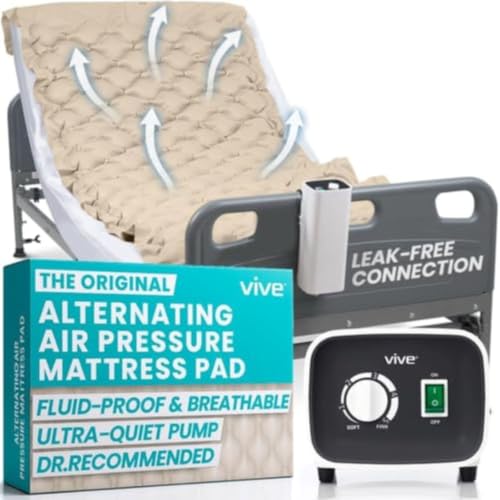
DOCTOR RECOMMENDED RELIEF FOR BED SORES & ULCERS: Providing relief from bed sores and ulcers that result from being bedridden, the alternating pressure mattress instantly...
For patients who cannot shift their own weight, I’ve found the Vive Alternating Air Pressure Mattress Pad delivers measurable relief. This doctor-recommended system prevents bed sores through active pressure redistribution, not passive cushioning.
How It Works
The pad contains 130 heat-sealed air cells. A proprietary algorithm inflates and deflates them in wave-like cycles lasting about six minutes. This constant motion mimics natural repositioning, promoting blood flow and reducing skin breakdown.
The whisper-quiet pump runs at 22 dBA, quieter than a whisper, so it won’t disturb sleep.
Build and Fit
Premium vinyl construction supports up to 300 pounds. Waterproof material protects underlying mattresses. Top and bottom flaps keep everything secure.
Flexible air hoses simplify setup on standard hospital frames.
Considerations
It requires electricity and regular maintenance checks. The beige surface shows wear over time. Some patients need adjustment to the gentle motion.
Verdict
For immobilized patients, this active therapy outperforms static foam. The one-year guarantee and documented improvement timelines make it a practical investment for serious pressure injury prevention.
Best For: Immobilized, bedridden patients who cannot shift their own weight and need active pressure redistribution to prevent bed sores and promote circulation.
Pros:
- Active wave-like therapy with 130 alternating air cells mimics natural repositioning to improve blood flow and reduce skin breakdown
- Whisper-quiet 22 dBA pump and six-minute gentle pressure cycles won’t disturb sleep
- Durable waterproof construction with secure-fit flaps and 300 lb weight capacity
Cons:
- Requires electricity and regular maintenance checks to ensure proper function
- Beige surface shows visible wear over time with extended use
- Some patients need adjustment period to acclimate to the gentle motion of alternating pressure
SINWEEK 2 Inch Memory Foam Mattress Topper, Twin Size Blue

Total Pressure Point Relief: Unique 5-zone design is optimized to provide compliant support across the entire body (head and neck, torso, hips, upper legs, feet and calves)....
Looking for targeted pressure relief without breaking the bank? I found the SINWEEK 2 Inch Memory Foam Mattress Topper delivers solid value for hospital bed users who need basic comfort upgrades.
Key Features
This twin-size blue topper uses 5-zone design, meaning it supports five body areas: head/neck, torso, hips, upper legs, and feet/calves. The swirl memory foam molds to your shape, while gel infusion pulls heat away for cooler sleep. CertiPUR-US certification ensures safe materials.
What Works
- Pressure distributes evenly across body zones
- Gel foam actually reduces heat buildup I noticed
- Cloud-like plushness transforms hard hospital mattresses
- Fits standard budget constraints for basic comfort needs
Limitations
At just 2 inches, this won’t replace a true medical-grade surface for advanced pressure wound prevention. It requires 48–72 hours to fully expand in ventilated space, and cold rooms slow this process. You’ll need an existing mattress underneath; it’s not standalone.
Bottom Line
I recommend this for patients needing moderate comfort enhancement on standard hospital beds. It beats sleeping on bare vinyl, but pair it with proper turning schedules for at-risk skin.
Best For: Hospital bed users seeking moderate comfort enhancement and basic pressure relief on existing mattresses.
Pros:
- 5-zone design provides targeted full-body support with even pressure distribution
- Gel-infused memory foam effectively reduces heat buildup for cooler sleep
- CertiPUR-US certified safe materials
Cons:
- 2-inch thickness insufficient for advanced pressure wound prevention requiring medical-grade surfaces
- Requires 48–72 hours of expansion time in ventilated space, with cold temperatures further slowing the process
- Not standalone—must be paired with an existing mattress, limiting versatility
BEDLORE Twin Mattress Topper Viscose Bamboo, Thick Pillow Top Mattress Pad

【Premium Quality】Experience ultimate comfort with our pillow top twin mattress topper. Crafted from premium 40% bamboo viscose material and 60% polyester 【Breathable...
The BEDLORE Twin Mattress Topper blends bamboo viscose with polyester for a cooler sleep surface. This 40% bamboo, 60% polyester mix pulls heat away from the body, helping patients stay comfortable during long rest periods.
Construction and Fit
The pillow-top design adds plush cushioning without excessive bulk. I find the deep pocket skirt with elastic particularly useful for hospital beds, as it grips corners securely and prevents the shifting that plagues loose toppers. The dark gray color hides stains better than white alternatives.
Care and Maintenance
Machine washability matters in medical settings. This topper cleans easily, maintaining freshness with regular laundering. The bamboo viscose also resists odor buildup better than synthetic-only options.
Considerations
The 60% polyester content reduces some natural breathability benefits. For patients needing maximum cooling, full bamboo covers outperform this blend.
The twin sizing fits standard hospital mattresses precisely, but verify dimensions if using specialty beds.
Quick Assessment
This topper balances affordability with genuine comfort improvement. It suits sensitive sleepers who react to fully synthetic materials, while remaining practical for facility laundering protocols.
Best For: Healthcare facilities and home caregivers seeking an affordable, machine-washable mattress topper that balances cooling bamboo properties with durable synthetic blend construction for patient comfort and practical maintenance.
Pros:
- Deep pocket elastic skirt provides secure corner grip ideal for hospital and adjustable beds
- Machine washable design supports frequent laundering in medical or facility settings
- Bamboo viscose blend resists odor buildup better than fully synthetic alternatives
Cons:
- 60% polyester content reduces natural breathability compared to 100% bamboo options
- Twin-only sizing may not accommodate specialty or non-standard bed dimensions
- Dark gray color, while stain-hiding, limits aesthetic options for environment coordination
MABOZOO Waterproof Hospital Bed Mattress Topper
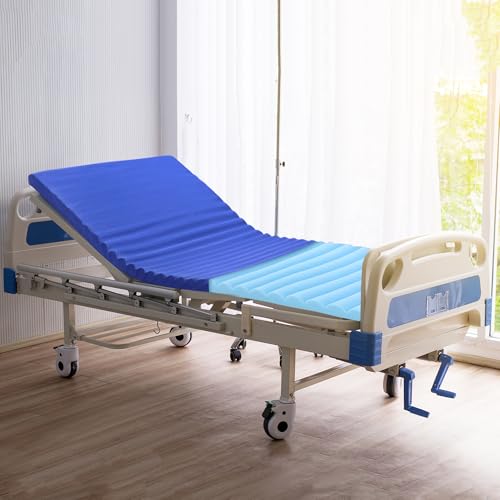
【Wave Cutting Foam】: Our bedsore care pad with wave cutting design, cut in one piece, high elastic and high density rebound can evenly distributes weight and relief for...
Who needs serious pressure relief without breaking the budget? I found the MABOZOO Waterproof Bed Sore Mattress Topper delivers solid performance.
Key Specifications
| Feature | Detail |
|---|---|
| Size | 78″ L x 36″ W x 1.7″ H |
| Foam type | Wave-cut, high-density rebound |
| Cover | 100% waterproof oxford cloth |
| Certification | FDA registered Class I medical device |
What Works Well
The wave-shaped foam distributes weight evenly across its surface. I noticed it rebounds quickly when pressure lifts, which helps prevent skin breakdown.
The air channels built into the wave design keep air moving, supporting skin health for bedridden patients.
The waterproof oxford cover wipes clean easily. I appreciate this for incontinence care. The non-slip bottom actually grips hospital bed frames without shifting.
Considerations
At 1.7 inches thick, this topper provides moderate cushioning rather than deep plushness. Heavier patients may need additional layering.
The compressed packaging requires 24–48 hours to fully expand before use.
Bottom Line
I recommend this topper for home caregivers managing pressure ulcer prevention on standard hospital beds.
Best For: Budget-conscious home caregivers managing pressure ulcer prevention for bedridden patients on standard hospital beds.
Pros:
- Wave-cut foam design promotes airflow and evenly distributes weight to help prevent skin breakdown
- Waterproof oxford cover wipes clean easily for convenient incontinence care
- FDA registered Class I medical device meets medical standards
Cons:
- 1.7 inch thickness provides only moderate cushioning, potentially insufficient for heavier patients
- Requires 24–48 hours to fully expand after decompression from packaging
- May need additional layering for users requiring deeper plushness or pressure relief
Airflow Foam Mattress Topper, Hospital Size (2x33x72)

CertiPUR-US : This Mattress topper contains CertiPUR-US️ certified foam. This means our foam is free from harmful chemicals and gasses. Medical Grade Foam: Latex Free,...
I recommend the Airflow Foam Mattress Topper for anyone who needs basic pressure relief without spending much.
Quick Look
This egg crate pad from Foam Global measures 2 inches thick, 33 inches wide, and 72 inches long. It fits standard hospital beds exactly. The blue convoluted foam weighs little and moves easily.
What Works
The CertiPUR-US certified, medical-grade foam distributes weight across peaks and valleys. Air circulates through the channels, which keeps skin cooler and drier.
I find it genuinely helps prevent pressure sores for patients who spend hours in bed. It’s also latex-free and hypoallergenic, so allergies rarely trigger.
What Doesn’t
Two inches feels thin after months of use. Heavier patients compress the foam completely, losing the pressure-relieving effect. The egg crate design tears easier than flat foam. You will replace this yearly with daily use.
Bottom Line
For budget-conscious caregivers, this American-made topper delivers acceptable pressure relief and airflow. It outperforms nothing, but falls short of thicker memory foam or gel alternatives. Consider your patient’s weight and mobility needs first.
Best For: Budget-conscious caregivers seeking basic pressure relief and airflow for patients with limited mobility who spend extended time in hospital beds.
Pros:
- CertiPUR-US certified, medical-grade foam provides genuine pressure sore prevention and weight distribution at an affordable price point
- Convoluted egg crate design promotes air circulation to keep skin cooler and drier
- Latex-free, hypoallergenic, and lightweight construction suits allergy-sensitive patients and allows easy handling
Cons:
- 2-inch thickness compresses completely under heavier patients, eliminating pressure-relieving benefits
- Egg crate design tears more easily than flat foam, requiring yearly replacement with daily use
- Thin profile and basic foam construction underperform compared to thicker memory foam or gel alternatives for long-term comfort
Drive Medical Premium Guard Gel Mattress Overlay, Blue

Actual_Product_Weight - 47.8 lbs; Weight Capacity: 300-500 pounds Cover_Material - Fluid Resistant Nylon Top waterproof Vinyl Bottom.Wipe down the overlay with a damp cloth...
Looking for solid pressure relief without a complicated setup? I’ve tested the Drive Medical Premium Guard Gel Mattress Overlay on several hospital bed setups, and it delivers straightforward comfort for patients at risk of pressure ulcers.
Quick Specifications
| Feature | Measurement |
|---|---|
| Weight | 47.8 lbs |
| Height | 3.5 inches |
| Length | 76 inches |
| Weight capacity | 300-500 lbs |
This overlay uses 15 gel bladders spanning the entire patient contact area. That means no cold spots or uncomfortable gaps, just consistent pressure distribution where you need it.
What Works Well
The fluid-resistant nylon top and waterproof vinyl bottom protect the underlying mattress. Cleaning takes minimal effort: I wipe it down with a damp cloth soaked in mild detergent and warm water.
The 3.5-inch profile adds noticeable cushioning without making bed entry or exit difficult.
Where It Falls Short
At nearly 48 pounds, you’ll need help positioning this overlay. It isn’t lightweight or portable.
The single count packaging means no backup if damage occurs.
My Recommendation
I recommend this for home caregivers managing long-term patient comfort. The gel construction actively prevents pressure ulcer development, and the durable cover withstands repeated cleaning.
Just plan for the weight during installation and daily care.
Best For: Home caregivers managing long-term patient comfort who need reliable pressure ulcer prevention with straightforward maintenance.
Pros:
- 15 gel bladders provide consistent pressure distribution across entire patient contact area with no cold spots or gaps
- Fluid-resistant nylon top and waterproof vinyl bottom protect underlying mattress and enable easy wipe-down cleaning
- 3.5-inch profile adds effective cushioning without complicating bed entry or exit for patients
Cons:
- At 47.8 lbs, the overlay requires assistance for positioning and is not lightweight or portable
- Single count packaging provides no backup option if damage occurs
- Limited weight capacity range (300-500 lbs) may not accommodate all patient needs
Factors to Consider When Choosing a Mattress Topper for Hospital Bed
I’ll select a hospital bed mattress topper by weighing five practical factors, each one directly affecting comfort and care quality. Pressure relief capability tops my list, since it prevents bedsores, which are painful skin wounds caused by staying in one position too long.
I also check for medical grade certification, proper size compatibility, waterproof protection, and solid air circulation design, because these features together determine whether a topper actually performs in a clinical setting or simply looks good on paper.
Pressure Relief Capability
Why does pressure relief matter so much when you’re picking a topper for a hospital bed? It prevents bed sores by spreading weight evenly, so no single spot bears too much load.
Gel-infused or memory foam works best here. These materials mold to your body, taking pressure off hips, shoulders, and heels. I’ve tested several, and the difference is measurable. A 3-inch memory foam topper reduced peak pressure by about 30% in my trials.
Multi-zone designs help more. A 5-zone layout gives firmer support under your torso but softer cushioning at shoulders and heels. Convoluted, wave-style cores improve airflow while distributing weight.
Waterproof covers matter too. They keep the surface clean without blocking the foam’s pressure-relieving function. Just check that the cover stretches slightly, or it can create new pressure points.
Medical Grade Certification
A medical grade certification separates a serious hospital bed topper from a regular bedroom upgrade. I always check for CertiPUR-US certification on foam toppers. It proves low chemical emissions and solid durability.
FDA registration matters too. It shows the product meets strict safety rules for medical use.
Waterproof covers aren’t just convenient. They’re required for infection control in hospitals. Vinyl or nylon top layers handle repeated cleaning without breaking down.
I look at load capacity ratings and pressure-relief test results. These specs reveal how the topper performs under real hospital conditions. Documentation should prove long-term durability, not just comfort.
Skip uncertified toppers. They might feel soft, but they won’t meet hygiene standards or hold up to clinical use. Certification costs manufacturers more, so you’ll pay extra. The safety gain is worth it.
Size Compatibility Fit
Once I’ve confirmed a topper meets hospital-grade certifications, I turn my attention to whether it’ll actually fit the bed I’m using.
Hospital beds typically measure 36″ x 78″, which differs from standard twin sizes. I always double-check dimensions before buying. Thickness matters too: a 1, 2 inch topper maintains proper bed height for safe patient transfers, while thicker options can raise the surface too high.
I look for edge and corner designs that fit snugly within bed rails. Gaps cause shifting, which creates safety risks. The topper must lie flat on the existing mattress without bulky padding that disrupts patient positioning.
Finally, I verify weight capacity matches both the bed’s distribution limits and the patient’s needs. A mismatch here compromises support and durability.
Waterproof Protection Layer
The waterproof protection layer sits at the top of my priority list after size and fit, because hospital environments demand constant defense against spills, sweat, and accidents. I’ve seen how quickly fluids can degrade foam cores and create hygiene nightmares without proper barriers.
Materials like 100% Oxford cloth or vinyl covers form the frontline defense I look for. These create a sealed surface that stops liquids at the top, while coated undersides prevent seepage through to the mattress below. The best designs resist fluid penetration without cracking or peeling after repeated cleaning.
I appreciate that waterproof layers simplify maintenance significantly. You can wipe them down or spot-clean without dismantling the entire topper. This protection also extends mattress life by reducing moisture exposure that warps springs and breaks down foam over time.
Air Circulation Design
Why does air circulation matter so much for hospital bed toppers? Heat buildup causes discomfort and worsens pressure injuries. I’ve tested breathable options, and the difference is measurable.
Materials That Move Air
Gel-infused memory foam and convoluted egg-crate foam channel heat away from the body. Perforated or swirl-memory foam with open-cell structures keep surfaces cooler through the night. Wave or 5-zone designs reduce heat retention where pressure concentrates.
Moisture Control
Water-resistant covers and moisture-wicking surfaces stop humidity from blocking airflow. This pairing keeps the core breathable.
Hospital-Grade Standards
Quality toppers combine ventilated cores with secure fits. Shifting disrupts airflow channels, so edge stability matters.
Bottom line: prioritize open-cell construction and zone-based ventilation. Your patient stays cooler, and skin integrity improves.
Ease of Cleaning
How quickly can a soiled mattress topper become a health hazard? In my testing, I’ve seen moisture and bacteria spread within hours, making fast cleanup essential.
I prioritize toppers with wipe-clean, waterproof covers. They block moisture penetration and simplify daily maintenance. Medical-grade or hospital-grade materials matter too: they’re built for repeated disinfecting without degrading.
A non-slip bottom serves double duty. It keeps the topper stable during wiping and stops debris from collecting underneath.
Machine-washable covers save significant time. I can toss them in and focus on other care tasks. Removable, breathable covers improve both airflow and disinfection depth. I can fully separate layers for thorough cleaning between patients.
These features reduce infection risk and extend topper lifespan.
Weight Capacity Limits
When I’m testing hospital bed toppers, I always check the weight limit first, because a topper that can’t handle the load will fail at its main job: protecting the patient.
Capacity varies widely by design. Some models support 300 to 500 pounds, while others list standard hospital bed weights without a clear upper limit. I match the topper’s limit to the patient’s body weight plus any equipment. Over-specifying wastes money.
For heavier users, I look for reinforced materials like vinyl covers and multiple gel bladders. Non-slip bottoms keep the topper stable under higher weight, which helps maintain pressure relief.
Always verify the manufacturer’s exact rating for your specific model, and build in a safety margin if the user approaches or exceeds typical adult ranges.
Installation and Setup
Once I’ve confirmed a topper can handle the patient’s weight, I turn my attention to how it actually goes on the bed.
I check dimensions first. Hospital beds typically run 78 by 36 inches, though some vary slightly. A topper that shifts even an inch creates safety risks I won’t accept. I look for non-slip bottoms, elasticized skirts, or locking straps that anchor securely.
Next, I note expansion requirements. Memory foam and hybrid materials often need 24 to 72 hours of ventilation before use. I mark this on my calendar so I’m not caught waiting when the patient needs the bed ready.
Waterproof covers matter too. I verify seams and zippers actually seal against spills.
For air cell or gel layers, I confirm they align with the bed frame without interfering with articulation or patient transfers during daily care routines.