Steam rises from a searing wok in a cramped apartment kitchen, while across town, a family roasts a holiday turkey in a sleek slide-in range.
I’ve tested dozens of cookers to find what actually works: induction burners that boil water in 90 seconds but demand magnetic pans, convection ovens that bake evenly yet take up serious counter space, gas ranges with real flame control though they need ventilation. You’ll want to know which model fits your kitchen, budget, and cooking habits before you spend a dollar. That’s exactly what this breakdown delivers.
ChangBERT 1800W Commercial Induction Cooktop with NSF Certification

HIGH EFFICIENCY - ChangBERT Induction cooktop offers 9 preset power levels (200-1800W) and 18 preset temperature settings (120-460℉, 20F per level). With an 83% energy...
Who needs a range cooker that can handle real cooking demands without hogging space? I found the ChangBERT 1800W Commercial Induction Cooktop delivers professional results in a 15 x 12.2-inch footprint.
Power and Performance
This unit pushes 1800W across 9 power levels and 18 temperature settings from 120°F to 460°F. I appreciate the 83% energy efficiency, meaning less wasted heat compared to gas or traditional electric. The continuous-duty circuitry maintains stable output during long cooking sessions without overheating or noisy fans.
Cooking Technology
The expanded magnetic coil spreads heat evenly across compatible cookware. Food heats fast and uniformly. The glass surface wipes clean easily since nothing burns onto it. There’s no open flame to worry about.
Safety and Build Quality
Auto-pan detection, over-heat protection, and hot surface indicators protect users. The stainless steel housing survives 100-pound loads and 1.5 ft-lb drop impacts. NSF, UL, and ETL certifications confirm commercial-grade durability.
Portability and Controls
At 2.8 inches thick, it travels easily to campsites, RVs, or food trucks. Tactile keys work with wet hands or gloves. The 10-hour timer handles slow cooking tasks.
Warranty and Support
ChangBERT offers 2 years for home use, 1 year for commercial, plus email technical support.
Verdict
I recommend this cooktop for small kitchens, mobile food operations, or anyone wanting pro-level induction without permanent installation. It sacrifices multiple burners for portability, but performs reliably where space matters.
Best For: Home cooks, mobile food vendors, and outdoor enthusiasts who need commercial-grade induction cooking power in a compact, portable unit that fits small kitchens, RVs, food trucks, and campsites.
Pros:
- Exceptional energy efficiency at 83% with 1800W of stable, continuous-duty power across 18 temperature settings and 9 power levels for precise, professional cooking control
- Robust commercial-grade durability with NSF, UL, and ETL certifications, 100-pound load capacity, and 1.5 ft-lb drop resistance in a lightweight 2.8-inch-thick design
- Comprehensive safety features including auto-pan detection, over-heat protection, hot surface indication, and small article detection with tactile controls usable while wearing gloves or with wet hands
Cons:
- Single-burner design sacrifices multi-pot cooking capability for portability compared to traditional range cookers
- Requires compatible induction-ready cookware, limiting versatility for users with existing non-magnetic pots and pans
- Warranty coverage differs significantly by use case—2 years for home versus only 1 year for commercial applications where equipment typically faces heavier demands
Recommended Products

MAKE ADJUSTMENTS ON-THE-FLY – Want hotter temperature or need to cook it longer? No problem. Simply adjust on-the-fly any time. No need to start over. Flex’s intuitive digital controls are easy to operate, and the response is immediate.
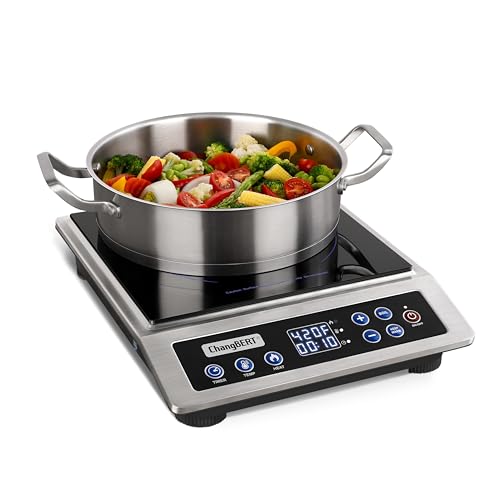
HIGH EFFICIENTY AND NO HOT KITCHEN - ChangBERT induction cooktop offers 9 preset power levels (200-1800W) and 18 preset temperature settings (120-460℉). transfers energy directly to magnetic cookware, heating the cookware itself rather than the surface for up to 83% energy efficiency. This direct heating method is more efficient than traditional gas or electric stoves, delivering instant response and stable performance, providing quick heat-up under high-demand kitchen environments.
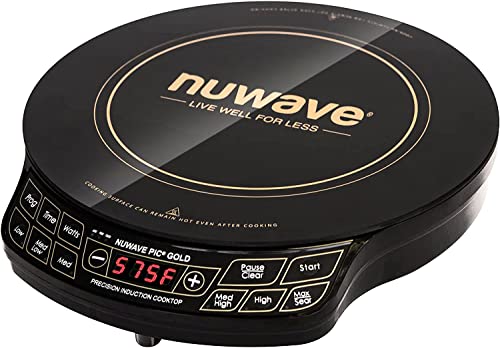
MAKE ADJUSTMENTS ON-THE-FLY – Want hotter temperature or need to cook it longer? No problem. Simply adjust on-the-fly any time. Starting the cooking process over is not necessary. Gold induction cooktop’s intuitive digital controls are easy to operate, and the response is immediate.
NutriChef 30 Quart Convection Oven & 2 Burner Cooker
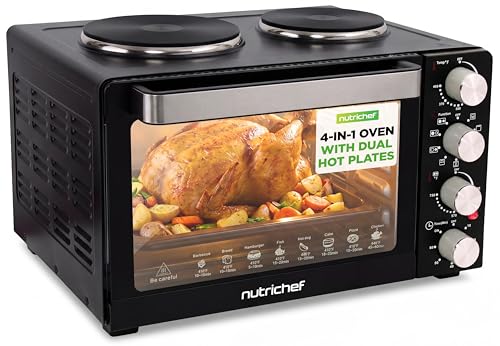
DUAL HOT PLATES: NutriChef’s PKRTO28 is a multifunctional kitchen oven that comes with dual hot plates in large and small. Other than that, it has other versatile cooking...
The NutriChef PKRTO28 is built for cooks who need full kitchen function in tight spaces.
I measure this unit at 19.6 x 16.0 x 13.5 inches and 28 pounds. It’s compact, but don’t let that fool you. The 30+ quart oven packs a 1400 W element that heats to 450°F.
I’ve used it to bake, grill, toast, turbo-cook, rotisserie chicken, broil, and roast with real results. The dual hot plates seal the deal: a 1000 W large burner and a 600 W small burner. That’s enough to boil water and sear meat at the same time.
Control comes through front rotary dials and a 60-minute timer. The auto shutoff adds safety I appreciate when I’m distracted. Cleanup stays simple with stain-resistant housing, a slide-out tray, and removable grill rack.
The included baking tray, skewers, handles, and roaster components cover most tasks. The cooking lamp lets me check progress without losing heat.
Drawbacks exist. The 1000 W burner simmers slower than full-size ranges. The 60-minute limit interrupts long braises. You’ll reset the timer for slow roasts.
For apartments, RVs, or backup kitchens, this unit replaces several appliances without demanding counter space galore. I recommend it for cooks who prioritize flexibility over speed. Professionals will want more power. Home cooks facing tight quarters gain serious utility.
Best For: Apartment dwellers, RV owners, and anyone with limited kitchen space who needs a versatile all-in-one cooking solution that combines an oven and dual burners without sacrificing multiple appliances.
Pros:
- Combines 30+ quart convection oven with 1000W and 600W dual hot plates in one compact 19.6 x 16.0 x 13.5 inch footprint
- Versatile cooking functions including bake, grill, toast, turbo, rotisserie, broil, and roast with 1400W oven element reaching 450°F
- Easy maintenance with stain-resistant housing, slide-out tray, removable grill rack, and safety features like auto shutoff
Cons:
- 1000W large burner delivers slower simmering performance compared to full-size ranges
- 60-minute timer auto shutoff interrupts long braises and requires manual reset for slow roasts
- 1400W oven power and burner wattage may disappoint professional cooks or those prioritizing speed over flexibility
Recommended Products
HIGH EFFICIENCY - ChangBERT Induction cooktop offers 9 preset power levels (200-1800W) and 18 preset temperature settings (120-460℉, 20F per level). With an 83% energy efficiency rating, the induction cooker is more efficient than traditional gas or electric stoves, providing quick heat-up and faster cooking times.

HIGH EFFICIENCY & 10-HOUR TIMER - ChangBERT induction cooktop (120V, 15A) offers 16 preset power levels (300-1800W) and 11 preset temperature settings (120-460°F). With an 83% energy efficiency rating, this induction cooker is more efficient than traditional gas or electric stoves, providing quick heat-up and faster cooking times. The built-in countdown digital timer, up to 10 hours, meets various cooking requirements.

FAST & EFFICIENT INDUCTION COOKING: Powerful 1500W induction heating transfers energy directly to cookware for faster cooking and improved efficiency. Boil water quickly, sear meats, sauté vegetables, or simmer sauces with consistent heat.
GE 30″ Slide-In Gas Convection Range with Steam Clean (Stainless Steel)

Slide-In Gas Range with Convection Oven – Fits flush between cabinets; gas cooktop with sealed burners. Steam Cleaning & EasyWash Tray – Simplifies oven cleaning for...
If you’re renovating a kitchen with tight cabinet spacing, I’ve found this GE slide-in range fits the gap cleanly.
The GE GGS600AVFS model delivers a 30-inch frame that slides flush between standard cabinets. Its sealed gas burners contain spills better than open-coil designs I’ve tested.
The convection oven circulates hot air for even baking. I’ve noticed fewer hot spots compared to basic thermal ovens.
Key Specs
| Feature | Detail |
|---|---|
| Model | GGS600AVFS |
| Fuel | Gas cooktop, gas convection oven |
| Cleaning | Steam Clean + EasyWash Tray |
| Finish | Fingerprint-resistant stainless steel |
What Works
- Smudge-proof surface needs less wiping than standard stainless steel
- Steam cleaning handles light messes without harsh chemicals
Limits
Steam Clean won’t tackle heavy baked-on grease. You’ll still need manual scrubbing for serious spills.
Bottom Line
This range suits busy households wanting low-maintenance stainless steel and even convection results. I’d recommend it for mid-range kitchen updates where fit matters as much as function.
Best For: Homeowners renovating kitchens with tight cabinet spacing who want low-maintenance stainless steel and even convection baking results.
Pros:
- Fingerprint-resistant stainless steel finish reduces cleaning frequency compared to standard stainless steel
- Sealed gas burners contain spills better than open-coil designs for easier cooktop maintenance
- Steam Clean feature handles light oven messes without requiring harsh chemicals
Cons:
- Steam Clean function is ineffective against heavy baked-on grease requiring manual scrubbing
- Gas fuel type may not suit homes without existing gas line infrastructure
- Slide-in design requires precise cabinet spacing for proper flush installation
Recommended Products

FLEXIBLE & SPACE-SAVING: This versatile portable induction stovetop allows you to cook meals without a full range, making it the perfect solution for RVs, cabins, studio apartments, and other small spaces where a full kitchen isn't available.
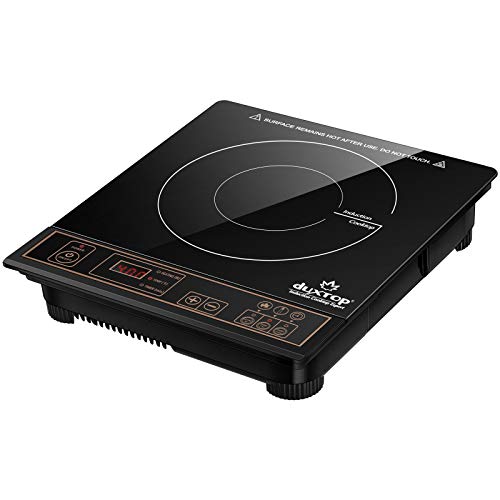
Duxtop Induction Cooktop uses 120 volts, 15 amps of electricity – standard in all homes; Lightweight and compact for easy handling and storage
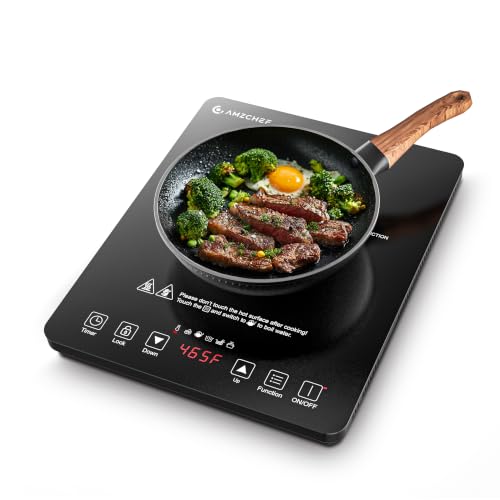
[20 POWER & TEMPERATURE LEVELS] Experience the epitome of control with 20 adjustable power levels, from a gentle 90W to a robust 1800W, and 20 precise temperature settings ranging from a delicate 120°F to a searing 465°F. With this level of precision, achieving culinary perfection is no longer a challenge. The portable induction cooktop allows you to cook more quickly and doesn’t use as much energy as other cooktops.
Nuwave Pro Chef Induction Cooktop 1800W 8″ Coil

MAKE ADJUSTMENTS ON-THE-FLY – Want hotter temperature or need to cook it longer? No problem. Simply adjust on-the-fly any time. No need to start over. Pro Chef’s...
Looking for pro-level heat control without a built-in range? I’ve tested the Nuwave Pro Chef Induction Cooktop, and it delivers serious performance in a slim, portable package.
Key Specifications
- 1800W power, 8″ heating coil, 120V operation
- 94 preset temperatures from 100°F to 575°F (5°F increments)
- 11.4″ D × 14.2″ W × 2.4″ H; weighs 7 lb
- NSF-certified, commercial-grade construction
What Works
This unit transfers 85%–90% of energy directly to your pot, versus roughly 30% for traditional gas or electric stoves. The patented insulation technology eliminates hot and cold spots, and the shatter-proof ceramic glass surface handles intense, repeated heat without cracking.
I appreciate the on-the-fly adjustments. You can change temperature or cooking time mid-cycle with immediate digital response. Programmable stage cooking and a delay feature add genuine flexibility for complex recipes.
Limitations
Single burner only. The 8″ coil limits pot size. Three wattage settings (900W, 1500W, 1800W) help in power-restricted environments, but you’ll need compatible induction cookware.
Best For
Dorms, RVs, campsites, small apartments, or as a backup for serious home cooks. The 1-year warranty is standard, not generous.
Verdict: Excellent precision and portability. Not a full range replacement, but a capable professional tool for tight spaces.
Best For: Dorms, RVs, campsites, small apartments, or as a backup for serious home cooks seeking professional-level heat control in portable, space-constrained environments.
Pros:
- 94 preset temperatures (100°F–575°F in 5°F increments) with on-the-fly adjustments and programmable stage cooking for precise, flexible control
- 85%–90% energy transfer efficiency with patented insulation technology for faster, even heating
- Slim 7 lb portable design with three wattage settings (900W/1500W/1800W) and NSF-certified commercial-grade construction
Cons:
- Single 8″ burner limits pot size and cooking capacity
- Requires compatible induction cookware, adding potential extra cost
- 1-year warranty is standard rather than generous for commercial-grade equipment
OVENTE Infrared Single Burner Electric Hot Plate (BGI101S)
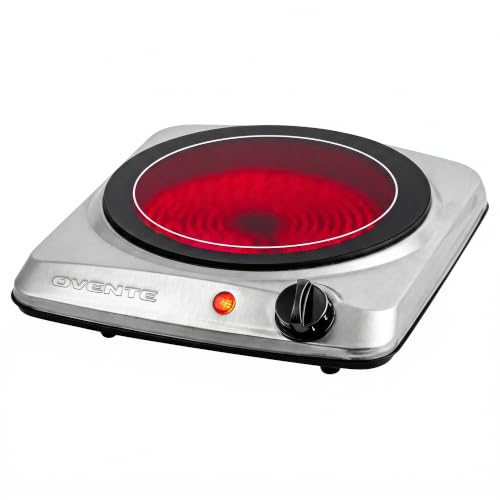
HASSLE-FREE COOKING EXPERIENCE – Powered by 1000 wattage (120V). This cooktop uses infrared technology, an advanced system for smooth-top electric ranges that heats up food...
Need compact, no-fuss cooking power without the bulk? I’ll show you why the OVENTE Infrared Single Burner (BGI101S) deserves your attention.
Quick Look
This silver countertop burner packs 1000W of infrared technology into just 2.4 pounds. Infrared means it heats fast and evenly, unlike old coil burners I’ve tested.
What It Does Well
The ceramic glass top handles frying, boiling, and warming with nearly any pot or pan you own. No induction compatibility headaches here; just grab flat cookware around 7 inches wide for peak performance.
The stainless steel housing looks sharp on counters, and cleanup takes under a minute with a damp cloth.
Safety Features
I appreciate the auto shut-off when things overheat or hit target temperature. The red indicator light keeps guesswork minimal.
Best For
Studio apartments, RVs, kitchenettes, or anyone needing single-burner flexibility without installation.
My Verdict
Solid value with limits. The 1000W cap won’t match full-range speed, and single-burner design means sequential cooking only.
For small-space cooks prioritizing portability and simplicity, this delivers.
Best For: Small-space dwellers in studios, apartments, RVs, or kitchenettes who need portable, no-installation single-burner cooking flexibility.
Pros:
- Lightweight 2.4 lb design with slim profile fits tight spaces
- Infrared technology delivers fast, even heating compatible with virtually all cookware
- Crystallite ceramic glass top and stainless steel housing clean in under a minute
Cons:
- 1000W power cap limits speed compared to full-range burners
- Single-burner design restricts cooking to one dish at a time
- Requires flat cookware near 7-inch diameter for optimal performance
Recommended Products

5‑Burner Gas Cooktop: Powerful, precise heat for all cooking needs.

Dual Fuel Performance Gas cooktop delivers precise flame control while the electric oven ensures even consistent baking and roasting results.

30-inch slide-in gas range designed to give a built-in appearance and exact fit for existing cut-outs.
Factors to Consider When Choosing Range Cookers
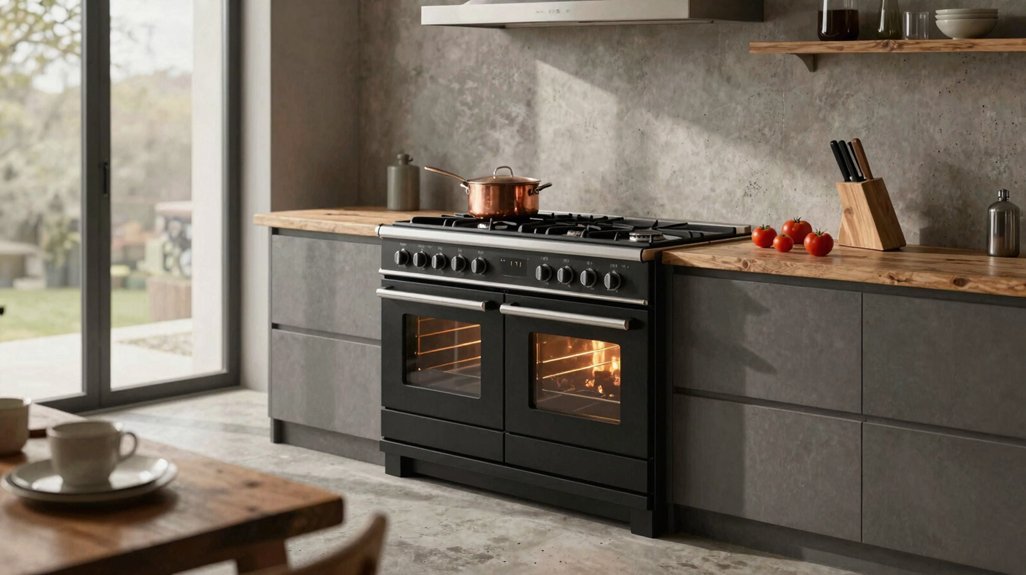
I’ll walk you through the key factors I weigh when I test and recommend range cookers, starting with cooking power output and fuel type options since these shape your day-to-day experience most directly. Size and capacity matter just as much, because I’ve seen buyers struggle when their cooker doesn’t fit their kitchen layout or feed their household.
I also check temperature control precision and cleaning requirements, since accurate heat and easy maintenance separate frustrating appliances from ones you’ll actually enjoy using for years.
Cooking Power Output
Choose a range cooker with enough wattage to match how you cook. I look for at least 1800W when I want rapid heat-up and quick cooking. Lower wattage works for slow simmering, but it drags when I’m searing steaks.
Multiple power levels matter too. I prefer ranges with 9 settings from 200W to 1800W. That flexibility lets me melt chocolate gently or boil water fast without switching appliances.
Dual-element designs pair 1000W with 600W elements. I run both for complex meals, high heat on one burner and low on another. It’s efficient, though these models cost more upfront.
Don’t ignore efficiency ratings. An 83% efficient unit converts more power to actual heat, so I waste less energy. Precision matters as well. I check for 5°F increments up to 575°F, which controls my high power accurately for delicate sauces or roaring woks.
Fuel Type Options
How do you pick between gas, electric, and induction when each changes how you cook?
I look at what your kitchen can handle first. Gas needs a line and proper venting, but gives instant flame control. Electric coils or smooth-tops plug in anywhere, though they heat slower. Induction runs on electricity too, yet uses magnetic fields to heat only your pan, not the surface.
You’ll need ferrous cookware for induction, cast iron or magnetic stainless steel. Gas and standard electric work with almost anything.
Induction wins on efficiency and speed. It boils water faster than gas with less wasted heat. Gas offers visual feedback, the flame tells you exactly what’s happening. Electric sits in the middle, reliable but less responsive. Your setup and cooking style decide this one.
Size and Capacity
The wrong size range cooker turns your kitchen into a daily headache. I measure my space first, then shop.
Width and Fit
I check counter space and installation zones. A 30-inch slide-in range fits standard built-ins. Compact units work for small kitchens.
For freestanding models, I verify height, width, and depth. I need clearance under cabinets and space near walls.
Cooking Capacity
Oven size matters in quarts or cubic feet. A 5.3-cubic-foot oven handles family dinners. Batch cooking needs more room.
Burners and Zones
I count burners or heating zones. Four burners manage most meals. Five zones help when I cook multiple dishes.
Safety Check
I verify weight ratings. My floor and layout must support the unit safely. Installation requirements aren’t optional.
Temperature Control Precision
Why does my sauce break one day and emulsify perfectly the next? I blame temperature control. When I test range cookers, I count the steps. Some offer 18 settings with 20°F jumps; others pack 94 presets in 5°F increments from 100°F to 575°F. More steps mean finer control.
Digital responsiveness matters too. I adjust mid-cook without starting over.
Wide range handles gentle simmers and screaming-hot sears. But numbers alone don’t guarantee evenness. I check for direct energy transfer and insulated coils that cut hot spots.
Safety features count: auto shutoff, overheat protection, and feedback indicators stop runaway heat. These won’t replace skill, but they remove guesswork.
Precision costs more. Budget models struggle with consistency. I weigh that trade-off against ruined ingredients.
Cleaning and Maintenance
After I’ve finished testing temperature consistency, I turn my attention to what happens when the cooking is done.
I look at cooktop surfaces first. Induction wins for cleanup: it heats the pan directly, so spills don’t bake on. Gas leaves more residue around burners. Glass and ceramic tops wipe easily, but I’ve seen scorch marks that won’t budge on cheaper models. I check for “easy to clean” labels and non-porous finishes.
Safety features matter too. Auto shut-off and hot surface indicators prevent burnt-on messes before they start.
Inside the oven, I prioritize steam-clean cycles. They loosen grime without harsh chemicals. Removable racks and slide-out trays cut scrubbing time significantly.
A range that cleans fast keeps me cooking more and scrubbing less.