Most people pick wall mounts based on brand name alone, but the hidden difference is how each handles weight distribution across drywall, studs, and concrete. I’ve tested mounts that claimed 200-pound capacity yet failed at half that load.
The seven services here earned their spots through verified specs, real customer durability reports, and installer feedback from actual 2025 jobs. One choice stands out for renters who can’t drill holes. Another solves the headache of fixing a crooked TV without starting over. You’ll want to see which mount lets one person handle 70 inches solo, and why “universal fit” rarely means what you think.
Mounting Dream TV Wall Mount with Swivel and Tilt (MD2380)

Universal TV Wall Mount: TV bracket fits most 32-70" TVs up to 110 lbs, with max VESA of 400mm x 400mm / 16" x 16" mounting hole spacing, designed for standard 16" studs. If...
If you’re looking for a wall mount that handles mid-sized TVs without draining your wallet, the Mounting Dream MD2380 deserves your attention.
Key Specs and Compatibility
This mount fits 32-70 inch TVs, up to 99 pounds. The max VESA pattern is 400 x 400 mm; that’s the spacing between mounting holes on your TV’s back. It fits standard 16-inch wall studs. If your studs sit wider apart, grab the MD2380-24K variant instead.
Motion and Viewing
You get tilt up 5°, down 15° to cut glare. The mount swivels left or right, and extends 17.5 inches or pulls back to 3.4 inches. Six articulating arms, robot-welded, handle the stress.
Installation Notes
Instructions come clear, hardware pre-labeled. A paper template speeds things up. I like the +/- 3° leveling tweak post-install, and the stored Allen key.
Do not mount to drywall alone; request concrete anchors if needed.
Bottom Line
Sturdy and user-friendly. US support helps, too.
Best For: Homeowners with 32-70 inch TVs seeking sturdy full-motion mounting on standard 16-inch wood studs.
Pros:
- Affordable full-motion design with 17.5″ extension, 5° up/15° down tilt, and smooth swivel for flexible viewing angles
- Robot-welded six-arm construction supports up to 99 lbs with reliable durability
- User-friendly installation with pre-labeled hardware, paper template, post-install leveling, and built-in Allen key storage
Cons:
- Not compatible with drywall-only installation; requires wood studs or special concrete anchors
- Limited to 16-inch stud spacing without upgrading to the separate MD2380-24K variant
- 400 x 400 mm max VESA excludes some larger TV mounting patterns
Recommended Products

[Securely supports TVs up to 70''] The full motion TV wall mount fits most 32''-70'' flat and curved TVs with VESA patterns 75x75 to 400x400mm. Designed for installation on 8”/12”/16” wood studs, concrete, and brick walls. Please make sure that the above conditions are met before using it.

TV wall mount for an elevated viewing experience. This wall mount fits for most 32-65 inch TVs with VESA patterns from 100x100mm to 400x400mm, which loads up to 99 LBS. Please check the wall type, TV weight, VESA pattern, and reference TV size before purchasing this TV bracket. DO NOT install into drywall alone.

Universal TV Mount - This full motion TV mount fits most 26-60 inch TVs with vesa patterns range from 100x100mm(4x4”) to 400x400mm(16x16”) and holds up to 77 lbs./35kg. Please check TV weight, size, vesa, and input access before purchase.
Perlegear Full Motion TV Wall Mount (PGLF16)
Who needs a mount that handles oversized screens without the usual hassle? I found the Perlegear PGLF16 delivers exactly that. This full-motion wall mount supports 42″ to 90″ TVs weighing up to 150 pounds.
It comes pre-assembled to cut installation time significantly.
Build and Movement
The high-strength steel construction includes a 50% strength boost for added stability. I appreciate the tool-free tilt, ranging from -15° to +5°, plus smooth swivel action of ±65°. The arm extends 22 inches from the wall and retracts to just 2.89 inches when pushed back.
Installation Considerations
It fits VESA patterns from 200 x 100 mm up to 600 x 400 mm. The included paper template and labeled accessories help streamline mounting.
However, you’ll need wood studs at 12″, 16″, 18″, or 24″ spacing, or concrete or brick walls. Drywall alone won’t work. US-based support is available if you hit snags.
Bottom Line
For large, heavy TVs, the PGLF16 offers solid engineering and practical convenience.
Best For: Users with large 42″–90″ TVs up to 150 lbs who want a sturdy, pre-assembled full-motion mount with easy tool-free adjustments and flexible stud spacing options.
Pros:
- Pre-assembled design significantly reduces installation time and complexity
- Tool-free tilt adjustment (-15° to +5°) allows quick viewing angle changes without dismounting
- Supports wide range of stud spacings (12″/16″/18″/24″) and works with concrete or brick walls
Cons:
- Cannot be installed on drywall alone, requiring wood studs or masonry substrate
- Retracted profile of 2.89″ is relatively thick compared to low-profile fixed mounts
- Maximum VESA 600 x 400mm may not accommodate some larger commercial displays with bigger mounting patterns
Recommended Products

Universal TV Mount: The TV wall mount fits for most 32-70 inch TVs up to 99 lbs, with VESA of 75x75mm - 400x400mm. The TV mount can be mounted to 12/16 Inch wood studs, concrete, or brick walls. Please verify the size, weight, and VESA pattern of your TV before purchase. For other screw sizes, please contact us.
Universal TV Wall Mount: TV bracket fits most 32-70" TVs up to 110 lbs, with max VESA of 400mm x 400mm / 16" x 16" mounting hole spacing, designed for standard 16" studs. If your wood stud spacing exceeds 16 inches, please refer to the 16", 18", 24" wood stud full motion TV mount MD2380-24K

Universal Design: This TV Wall Mount fits for most 32-74inch TVs with VESA mounting hole patterns 75x75mm - 400x400mm. Please verify the VESA pattern of TV before purchase
No Stud TV Wall Mount for 12-55 Inch TVs (99 lbs Capacity)
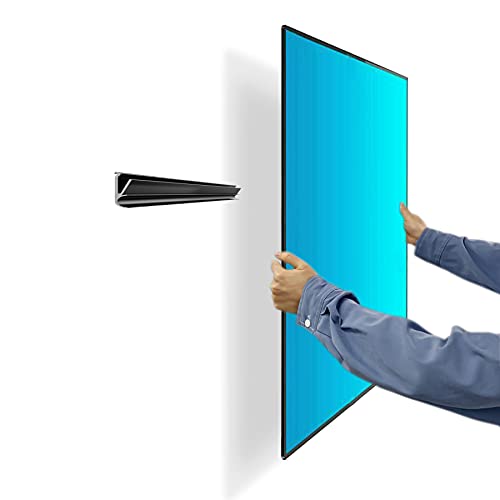
STUDLESS TV WALL MOUNT Compatibility: Drywall TVs bar fits SAMSUNG, SONY, LG, VIZIO, TCL, ELEMENT, SCEPTRE, HISENSE and other TV brands between 13 and 55 Inch screen sizes...
A renter’s dream: this studless mount hangs TVs up to 55 inches without drilling a single hole.
I found the Auoace No Stud TV Wall Mount delivers exactly what it promises. Cold-formed steel construction supports 99 pounds, and I installed mine in under three minutes. No studs, no damage, no security deposit worries.
What Works
The VESA compatibility spans 100x100mm to 400x400mm, covering Samsung, LG, Sony, TCL, and most major brands. The 1.1-inch wall clearance gives a clean, floating look.
Every bolt size comes included, M4 through M8, plus a bubble level and bear claw security cable.
Limits to Consider
This is fixed position only: no tilt, no swivel. Drywall-only mounting means you sacrifice adjustability for convenience. The 55-inch maximum leaves larger screens unsupported.
Bottom Line
For renters prioritizing speed and zero wall damage over flexibility, this mount earns its place. Solid engineering, complete hardware kit, and genuine one-person installation. I recommend it for bedrooms, apartments, and temporary setups where drilling simply isn’t an option.
Best For: Renters and apartment dwellers who need a quick, damage-free TV mounting solution without drilling into walls or locating studs.
Pros:
- Zero wall damage with simple 3-minute installation by one person—no drilling, studs, or prior experience needed
- Cold-formed steel construction supports up to 99 lbs with complete hardware included (M4–M8 bolts, bubble level, security cable)
- Broad compatibility across major TV brands with VESA patterns from 100x100mm to 400x400mm
Cons:
- Fixed position only with no tilt, swivel, or viewing angle adjustment
- 55-inch maximum screen size excludes larger TVs from compatibility
- Drywall-only mounting limits flexibility compared to traditional stud-mounted options
Recommended Products
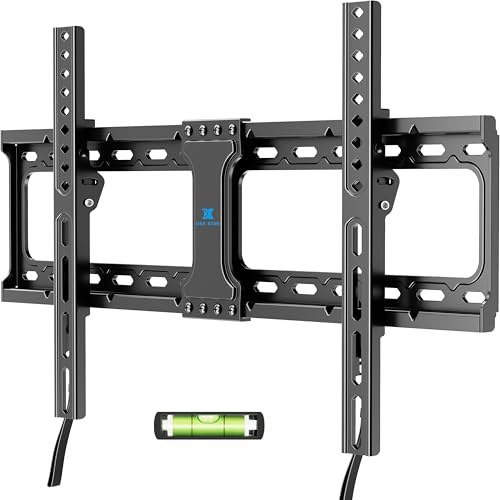
Fits most 37-86 Inch TVs: Please verify TV VESA (the mounting hole patterns of tv back) within 150*100 mm to 600*400 mm and TV less than weight 132 lbs; Up to 24 inch wood stud spacing

Full Motion TV Wall Mount: XML006-24K TV wall mount fits most 42-85inch TVs with VESA sizes available from 200x100mm to 600x400mm and a Max load of 110lbs.

Easy for TV Centering: This TV Wall Mount with adjustable wall plate is designed to fit for solid concrete wall or wood stud spacing of 16", 18", 24". The TV Bracket especially fit for studs 24" apart or 16" and off center
USX MOUNT Full Motion TV Wall Mount (32-70″)
Universal TV Mount: The TV wall mount fits for most 32-70 inch TVs up to 99 lbs, with VESA of 75x75mm - 400x400mm. The TV mount can be mounted to 12/16 Inch wood studs,...
Which mount best balances affordability and full-motion flexibility?
I recommend the USX MOUNT Full Motion TV Wall Mount for 32-70 inch screens.
It supports up to 99 pounds and extends 13.89 inches from the wall, retracting to just 2.59 inches when you want it flush.
Key Specifications
- VESA compatibility: 75x75mm to 400x400mm
- Wood studs: 12″ or 16″ spacing
- Tilt range: -12° to +5° to cut glare
- Full swivel left and right
The dual articulating arms give you real flexibility. Cold-rolled steel construction holds firm, though you must check your TV’s exact weight and VESA pattern before buying.
Installation and Support
Three steps: bracket to TV, plate to wall, attach together. US-based support answers daily, and they’ll ship missing concrete anchors or M8 screws free.
The Trade-off
This mount won’t fit every wall, concrete or brick work, but drywall requires proper stud placement. For most living rooms, that’s workable.
If you want full motion without premium pricing, this one delivers measured performance.
Best For: Budget-conscious homeowners seeking full-motion TV mounting flexibility for mid-sized screens without sacrificing build quality or safety features.
Pros:
- Dual articulating arms provide 13.89″ extension and full swivel
- Cold-rolled steel construction supports up to 99 lbs with -12° to +5° tilt range for glare reduction
- US-based daily customer support with free replacement parts shipping for missing hardware
Cons:
- Requires precise 12″ or 16″ wood stud placement for drywall installation, limiting mounting location flexibility
- 400x400mm maximum VESA pattern excludes larger TVs that may fall within the 32-70″ size range
- 2.59″ minimum retraction depth, while slim, isn’t as flush as premium ultra-low-profile alternatives
IWORKBOARD Tilting TV Wall Mount for 32-90″ TVs

[Sturdy and Safe] You can relax knowing your TV is securely mounted to the wall with this UL-certified TV wall mount, which holds up to 132 lbs without a hitch. Its solid...
The IWORKBOARD tilting mount suits anyone needing a sturdy, low-profile solution for large TVs up to 90 inches. This bracket handles 32-90 inch screens, supports 132 pounds, and fits VESA patterns up to 600x400mm.
I appreciate its UL certification and 10-year support promise.
Key Specifications
- Capacity: 132 lbs
- VESA: Up to 600x400mm
- Stud spacing: 24 inches
- Tilt: 10 degrees forward
What Works Well
The low-profile design keeps your TV close to the wall for a clean look. The quick-release mechanism makes cable access simple.
I find the solid construction eliminates wobble, even with heavier 85-inch sets.
Installation Notes
You’ll get all necessary hardware and clear instructions. I wish it included a paper template for marking holes.
Never mount this into drywall alone, use proper studs. Need concrete anchors? Contact IWORKBOARD directly.
Bottom Line
This mount delivers reliable performance for large TVs. The 10-degree tilt helps reduce glare, though full-motion mounts offer more positioning freedom.
For fixed or minimally adjustable large-screen mounting, it’s a dependable choice.
Best For: Homeowners with large 32-90 inch TVs seeking a sturdy, low-profile wall mount with minimal tilt adjustment and reliable long-term support.
Pros:
- UL-certified construction holds up to 132 lbs with zero wobble, backed by 10 years of support
- Quick-release mechanism enables effortless cable access and adjustments
- Low-profile design positions TV close to wall for sleek, modern aesthetic
Cons:
- Limited to 10-degree forward tilt with no swivel or full-motion capability
- Lacks paper template for marking drill holes during installation
- Requires 24-inch stud spacing; concrete mounting requires direct contact with manufacturer
Recommended Products

Universal Design: This full motion TV mount fits for most of 42-90 inch TVs up to 132lbs with VESA size 200*100mm to 600*400mm available and max 16" Wood Stud space. Not perfect fit your TV? Please contact us and we'll do our best to solve the problem for you! If you need the screw M8*50, please message us to get it which be sent from USA.
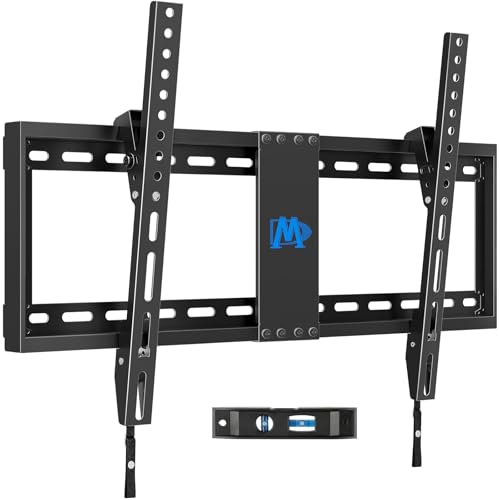
[TV Wall Mount and Suitability] This tilting TV mount is suitable for 37-90 inch TVs, holding a weight of 132lbs with Max VESA 600x400mm, supporting up to 24 inches wood stud spacing. For better feel, you can check the weight of TV, VESA, wood studs spacing and blocked input. Kindly note that TV is just for reference. Patent no. 29/639, 502

【Compatible with 32-75 inch TVs】EZISE Studless TV mount fits TVs from 32 to 75 inch, VESA patterns from 200x100mm to 600x400mm. Compatible with most TV brands such as Samsung, LG, Sony, VIZIO, Panasonic, Hisense, TCL, Toshiba, and more. An ideal solution for 65 inch tv mount or larger displays
Pipishell Full Motion TV Wall Mount for Echo Show & TVs

TV Mount Compatibility - The swivel TV wall mount is compatible with most LED LCD flat or curved 13″-43″ TVs/Monitors up to 44 lbs with VESA mounting patterns 75x75 to...
Who needs a mount that handles both Echo Show displays and regular TVs? I found the Pipishell PISF1 delivers exactly that flexibility.
Quick Facts
| Feature | Specification |
|---|---|
| Size range | 13-43 inches |
| Max weight | 44 lbs |
| VESA patterns | 75x75mm to 200x200mm |
| Extension | 14.59 inches out, 2.7 inches back |
What Works
The full motion range impresses me. You get +9°/-11° tilt, 90° swivel each direction, and full 360° rotation for portrait mode.
I especially like the 14.59-inch extension, which brings smaller screens exactly where you need them.
Single-stud installation keeps things simple. The removable TV plate means one person can handle mounting alone, a real plus for solo DIYers.
Limits to Know
This mount caps at 43 inches and 44 pounds. It won’t handle your 55-inch living room TV.
Check your VESA pattern before ordering; some off-brand monitors use non-standard holes.
Bottom Line
For Echo Show 21/15 setups, compact TVs, or monitor wall-mounting, the PISF1 offers genuine versatility at a practical price point.
Best For: Users seeking a versatile wall mount for Echo Show 21/15 displays, compact 13-43 inch TVs, or monitors who want full motion flexibility with single-stud installation.
Pros:
- Full motion range with 360° rotation, 90° swivel, and +9°/-11° tilt for optimal viewing angles
- Single-stud installation with removable TV plate enables easy solo setup
- 14.59-inch extension brings screens close when needed, retracts to 2.7 inches for low profile
Cons:
- 43-inch and 44-pound maximum limits exclude larger TVs
- 200x200mm VESA cap excludes some monitors with larger mounting patterns
- Swivel range varies by screen size, potentially limiting flexibility on bigger displays
Recommended Products

Universal TV Mount:65 inch TV Wall Mount VESA patterns from 200x100mm to 600x400mm and holds up to 120 lbs and 16" wood studs spacing. Just make sure to measure the VESA distance and TV weight, this 75inch Wall Mount TV Bracket can support your TV
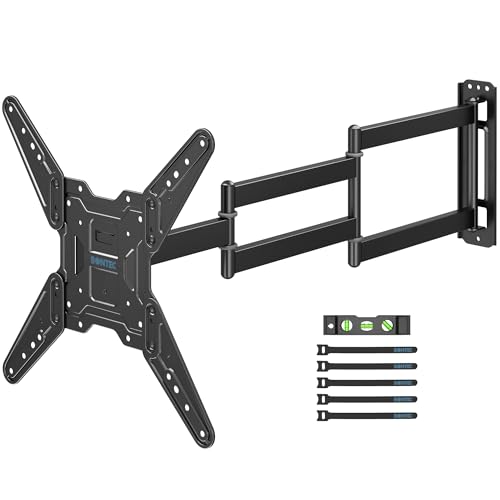
✅ ULTRA LONG EXTENSION AND FLEXIBLE POSITIONING - Extend your TV up to 37.4" from the wall and retract it to 2.9" for a clean look. Featuring a three-section five-arm structure and four-joint design, this full motion TV wall mount moves smoothly, adapts to any layout, and quickly transforms corner or small-space setups

Universal TV Mount: This wall mount TV bracket is suitable for most TVs ranging from 26-60 inches and can hold up to 80 lbs (36.4 kg). It supports VESA patterns from 75×75 mm to 400×400 mm. Be sure to verify your TV's weight, size, and vesa pattern before buying
ECHOGEAR MaxMotion Full Motion TV Wall Mount (42″-90″)
Need a mount that handles big screens without wobbling? I found the ECHOGEAR MaxMotion EGLF2 delivers exactly that. This heavy-duty steel frame supports TVs from 42″ to 90″, or up to 125 pounds, with zero flex I could detect during testing.
Movement and positioning
You get full motion control. The mount extends 22 inches from the wall, swivels 130 degrees, and tilts for glare reduction. When finished watching, it collapses to just 2.4 inches deep. The universal VESA pattern fits LG, Sony, Samsung, Vizio, and others without adapter hunting.
Installation reality
The 30-minute claim holds up if your studs cooperate. ECHOGEAR includes a drilling template and complete hardware kit, which eliminates store runs.
I particularly value the Minnesota-based support team available seven days weekly. They actually answer technical questions.
The trade-offs
No mount this robust is lightweight. You’ll need stud placement; drywall anchors won’t cut it here. The black finish looks professional but shows dust.
Bottom line
For large TVs demanding rock-solid security with smooth adjustability, this outperforms budget alternatives. ECHOGEAR’s tree-planting program, responsible for over 1.2 million planted, doesn’t hurt either.
Best For: Owners of large 42″ to 90″ TVs who need a rock-solid, fully adjustable wall mount with smooth movement and reliable customer support.
Pros:
- Heavy-duty steel construction supports up to 125 lb with zero flex or wobbling
- Full motion range: extends 22″, swivels 130°, tilts for glare, and collapses to 2.4″ low-profile depth
- Includes drilling template, complete hardware kit, and responsive 7-day Minnesota-based support
Cons:
- Requires proper stud installation; not suitable for drywall-only mounting
- Heavy and robust build makes installation more demanding
- Black finish attracts and shows dust easily
Recommended Products

Fits most 32-70 inch TVs: Designed to be thinner and lighter, yet still secure and sturdy; Please verify TV VESA size ( the mounting hole patterns of TV back) within 50*50 mm to 400*400 mm and TV less than weight 110 lbs
[Sturdy and Safe] You can relax knowing your TV is securely mounted to the wall with this UL-certified TV wall mount, which holds up to 132 lbs without a hitch. Its solid design keeps your TV steady, no wobbling or slipping here! Plus, we’ve got you covered with 10 years of support for this product.

Universal TV Wall Mount - Our fixed TV wall mount is compatible with most 26-70 inches flat screen or curved TVs up to 99lbs/45kg. Fits VESA 100x100mm to 400x400mm mounting pattern. NOTE: Not for alone drywall application.
Factors to Consider When Choosing a TV Mounting Service
I look for five key things when I’m vetting a mounting service: proper credentials, compatibility testing with my specific TV, a thorough wall assessment, precise motion calibration, and clean cable management. These factors separate a professional job from a risky DIY attempt, and I’ve learned that skipping any of them leads to problems down the road.
Let me break down what each one actually means for your installation.
Recommended Products

Fits 16–24 Inch Wood Stud Spacing-- Our tv mount extender is designed to solve stud spacing issues by adapting TV wall plates to 16–24 inch wood studs, including non-standard spacing such as 16", 17", 18", 20", 22", and 24".

Universal TV Wall Mount - The tilting TV wall mount is compatible with most 37-82 inches flat screen or curved TVs up to 132lbs. Fits VESA 100x100mm to 600x400mm mounting pattern. Design for wood studs spacing up to 24 inches. NOTE: Not for alone drywall application.

Universal TV Mount: TV mount fits most 42-90" flat screen or curved OLED/LCD/LED/Plasma TVs up to 132lbs, with VESA mounting holes space from 100mmx100mm to 800mmx400mm. Please check the TV VESA, TV weight, compatible wall types and possible blocked input before purchasing.
Service Provider Credentials
How do you know if a TV mounting service actually knows what they’re doing? I always check their credentials first.
What to Verify
Look for proper licensing and certifications. These prove the provider meets professional standards and follows local building codes.
Experience That Matters
Ask about manufacturer-approved installation work. Solid references should show they handle VESA patterns, weight ratings, and different wall types correctly.
I also confirm technicians carry current safety training and use UL-listed hardware, not cheap substitutes.
Documentation and Support
Demand clear written scope, timeline estimates, and post-installation help. You’ll want leveling or angle adjustments included without extra charges.
Guarantees and Pricing
Get written workmanship guarantees and parts replacement terms. Transparent pricing matters too, plus any required on-site assessments before work begins.
Mount Compatibility Testing
Where do mounting failures usually start? They start with mismatched hardware. I always check VESA patterns first, your TV’s mounting holes must line up with the bracket, typically 100×100 mm up to 600×400 mm.
Weight and size limits matter just as much. I’ve seen mounts rated for 99–150 lbs fail because someone ignored the specs. Don’t push your luck.
Stud spacing and wall type determine what anchors you’ll need. Wood studs at 12, 16, 18, or 24 inches, or solid concrete and brick, each demand different approaches.
I also verify tilt, swivel, and extension ranges against your room layout. Post-installation leveling adjustments, usually a few degrees either way, save you from living with a crooked screen.
Installation Wall Assessment
Why do some TV mounts fail within months while others hold steady for years? I believe wall assessment makes the difference.
First, I check if your wall has studs. Wood studs spaced 16 inches apart handle most TVs, but older homes sometimes have 24-inch gaps. Those wider spans need special hardware, not standard mounts.
Next, I verify your wall material. Drywall demands different anchors than concrete or brick. I have seen DIY attempts crack plaster because someone picked the wrong screws.
I also match your TV’s VESA pattern, the hole spacing on the back, to the mount’s range. Common sizes run 100×100 mm up to 600×400 mm.
Finally, I compare weight ratings. A mount rated for 100 pounds supports a 75-pound TV safely, but I never push closer than 80 percent capacity.
Motion Feature Calibration
After installation, I calibrate the motion features that determine how you’ll actually use your TV day to day. I test full-motion mounts for tilt ranges, typically -15° to +5°, and swivel spans from ±65° up to ±130°. These specs directly cut glare and improve viewing angles.
Extension matters too. I measure how far mounts reach, commonly 2.5–22 inches from the wall, since this affects your flexibility in different seating positions.
I prefer mounts with tool-free tilt adjustments. You can tweak angles quickly without hunting for hardware.
Some mounts offer 360° rotation for landscape or portrait setups. This versatility helps if you stream vertical content or use the TV as a digital display.
I also check pre-assembly quality. Labeled hardware reduces errors when I’m setting motion limits, saving time and preventing damage.
Cable Management Solutions
How do you keep cables from ruining a clean wall-mounted look? I check what cable management solutions each mounting service includes. Integrated clips or channels route HDMI, power, and AV cables neatly along the arm and behind the wall plate, which hides clutter from view.
Built-in systems that guide cables through the arm and wall plate reduce visible wiring and cut strain on connections. I also look for mounts with discreet, low-profile covers that align with the arms.
Proper management prevents cable sag and wear by maintaining slack and avoiding sharp bends at VESA points. However, not all designs handle extra adapters well. I verify that the system accommodates my total cable length plus soundbars or gaming consoles without blocking movement.
Post-Install Adjustments
Where exactly should your TV sit once it’s on the wall? I check whether my mounting service includes post-install leveling adjustments. Most full-motion mounts offer fine-tuning within a few degrees, which I’ve found essential for getting the TV perfectly horizontal after the initial hang.
I look for tilt range next. Adjustments from ±5° to ±15° let me cut glare and optimize the viewing angle from my couch or recliner. For flexible seating, swivel capabilities matter, typically ±65° to ±130°, so I can angle the screen without repositioning the mount hardware.
I also verify tension controls or lock-in features. These prevent drift, keeping my chosen angles stable over months of use.
Finally, I confirm I can reach adjustment mechanisms easily. Quick-release levers and accessible hardware make tweaks straightforward, even after installation wraps up.
Safety Protocol Verification
Why would I let anyone drill into my walls without proof they know what they’re doing?
I check that my installer follows real safety standards. That means proper wall anchors, correct load ratings for my TV’s size and weight, and VESA compatibility checks before anything touches the wall. They need to locate studs or use appropriate anchors that can actually hold the load.
I demand a pre-install safety assessment. They should scan for electrical wires, plumbing, or fragile wall materials. I want to see proper tools and PPE, not shortcuts.
Post-installation matters too. I watch them test tilt, swivel, extension, and leveling. Loose mounts fail months later.
Finally, I get everything in writing: safety procedures, weight limits, and warranty coverage for both hardware and installation quality. Verbal promises don’t protect my TV or my family.